The Permanence of Refusal: Interview with Ding Yi – ArtAsiaPacific
12 May 2026
More than three decades after participating in the first major exhibition of Chinese art abroad, Ding Yi is making his solo debut in Venice at Fondazione Querini Stampalia. Titled “Cosmotechnics”—in reference to philosopher Yuk Hui’s notion that the universe and age-old value systems are shaped by technical dynamics of artmaking—the presentation traces the Shanghai-based artist’s visual language since the 1980s, gathering new and historic works that probe the generative logic of abstraction while interacting with the Carlo Scarpa-designed modernist architecture of the Fondazione. The show is anchored by an array of stone steles in the Area Scarpa garden, synthesizing the different cultural meanings of the monument to contemplate broader ideas of time, space, and observation.
During the preview week of the 61st Venice Biennale, ArtAsiaPacific sat down with Ding Yi to discuss the spiritual evolution of his artistic approach, and how his practice is informed by his travels and the deep-seated perceptual frameworks of ancient civilizations.
Your work was included in the very first presentation of Chinese art at the Venice Biennale in 1993. Now, more than 30 years later, you’ve returned with a major solo exhibition. What has changed in your own sense of where your work stands in Venice, and in the global art world?
30 years is long enough that I can reflect on it with more clarity. In 1993, we were selected by Achille Bonito Oliva for the 45th Venice Biennale, and looking back, there was something essentially accidental about China’s presence there. Chinese contemporary art had only really begun around 1979, so we arrived in Venice with barely a decade of history behind us, and almost none of it had been translated into the kind of self-knowledge that makes genuine exchange possible. There was real excitement, but also a fundamental opacity in our relationship to what we were encountering. I spent nearly three months in Italy on that trip, moving through more than 20 cities from north to south and visiting every museum I could. I discovered original works by old masters and antiquities—things I had only ever seen as reproductions. Many of us were standing in front of these pieces for the very first time.
What has really changed over the past three decades is the quality of judgment. In 1993, we took everything in without fully evaluating it. Today, this mentality is no longer possible, and it’s probably not desirable either. I now know what I want, and what I can refuse. This, I think, is the real measure of how Chinese contemporary art has matured. So when I say that being selected in 1993 was accidental, I mean we were caught in a current we didn’t understand at the time. But mounting a solo show at Fondazione Querini Stampalia today feels necessary, not in a triumphant sense, but more in how the body of work has reached a point where it demands a certain kind of encounter—if not here, then a setting of comparable weight. In the past 40 years, Chinese contemporary art has moved from incomprehension to familiarity to something increasingly parallel with—rather than derivative of—Western practice, in terms of conceptual logic, artistic philosophy, and intellectual ambition. That’s the labor of a generation. We came to Venice in the ’90s without real confidence, because we knew how little we understood. Today I think we can hold a more substantial dialogue, including on questions of politics, philosophy, and what it means to be contemporary on our own terms.
Read the full article by Louis Lu for ArtAsiaPacific here.
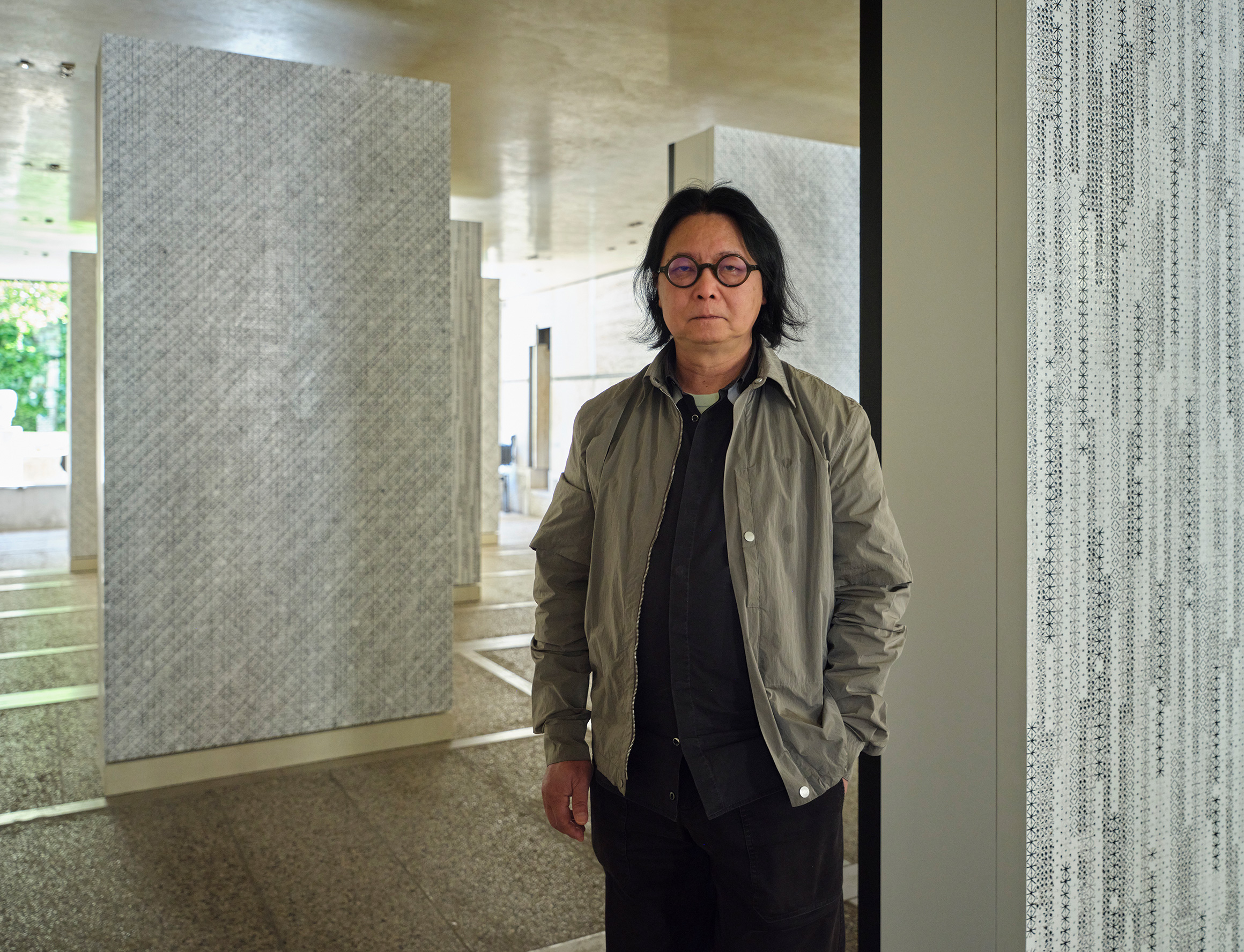
Image: Portrait of Ding Yi at “Cosmotechnics: Ding Yi as a Planetary Code,” Fondazione Querini Stampalia, Venice, 2026 © Ding Yi, Courtesy Lisson Gallery and ShanghART Gallery.