El Museo Del Barrio and KMEC Books to Publish the First Monograph Devoted to Tony Bechara
1 September 2026
The 240-page volume spans five decades of the painter's grid-based abstraction, edited by Karen Marta with a foreword by Patrick Charpenel, an essay by Domitille d'Orgeval and an interview by Hans Ulrich Obrist.
El Museo Del Barrio and KMEC Books, will co-publish Tony Bechara, the first monograph dedicated to the beloved New York artist and cultural mainstay, published posthumously on November 24, 2026. Distributed worldwide by D.A.P./Distributed Art Publishers, the volume gathers nearly 200 color plates.
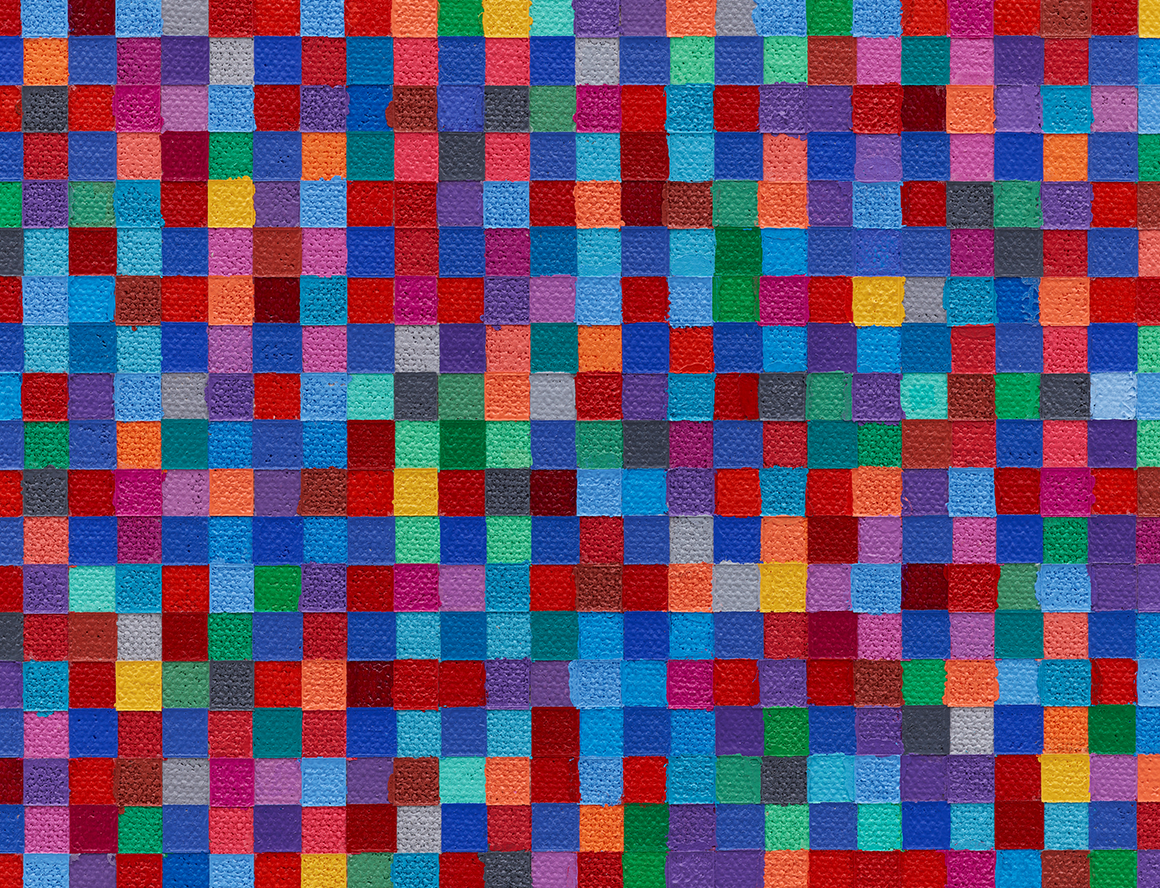
Born in Puerto Rico, Tony Bechara (1942-2025) was a longtime resident of New York City, where he practiced abstract painting. Drawing inspiration from a range of sources, his singular artistic approach was grounded in an exploration of color theory across tile-like grids to expand the possibilities of perception. This monograph spans Bechara's five decades-long artistic career, collecting paintings, studies, and mosaic work that illustrate the development of his unique vision. Also included is an in depth essay by French art historian Domitille d'Orgeval on the evolution of his practice, an interview with the artist by Swiss curator Hans Ulrich Obrist, as well as a postscript by his companion, Désirée von la Valette.
Across the contemporary landscape of the visual arts, professionalization has increasingly carved out distinct roles, in which artists, curators, gallerists, collectors, critics, and editors are asked to operate within clearly defined spheres. This tendency toward specialized knowledge, driven by the global economy, has rapidly fragmented systems of cultural production. More and more each actor must work exclusively within a particular domain. Fortunately, there are figures who break with this pattern, moving confidently across multiple disciplines and fields of specialization while simultaneously developing profound, distinct artistic languages. Artist Tony Bechara—whose innovative abstractions reflected his diverse experiences as well as his generosity of spirit—was one such polymathic figure.
Antonio Bechara was born in San Juan, Puerto Rico, in 1942. From an early age, he showed a strong interest in a wide range of intellectual and professional pursuits. At twelve years he was enrolled in the New York Military Academy in Cornwall, New York, and later moved to Washington, D.C., to study law and international relations at Georgetown University. After attending graduate school at New York University and traveling across Europe, eventually in 1969 he settled in New York City, where he devoted himself to painting.
Bechara's time in New York City marked a decisive turning point in his life. He began developing his practice as a visual artist, pursuing a form of abstraction shaped by a fragmentary sensibility. His work is distinguished by the presence of a dense grid that extends across the entire pictorial surface. Within this gridded structure, he applied minute fields of color that generate shimmering visual atmospheres composed of thousands of chromatic points. This method allowed him to set, with deliberate intent, the vibrant effects of these minimal units against the monochrome explorations of other painters of his generation. In this sense, his work anticipated the logic of the pixel, which would later become foundational to the digital image and to the visual paradigm of the twenty-first century. His 1985 solo exhibition at Museo Del Barrio, Tony Bechara: Paintings 1980-1985, is considered the museum's first entirely abstract show.
As he worked to make his mark in painting, Bechara also actively supported artistic and cultural initiatives, quickly developing a civically engaged profile focused on advancing other artists' careers and supporting major museums and cultural institutions. A tireless advocate for Latin American art, over the decades he forged his unique identity as an artist-cultural figure, never losing sight of his artistic calling and continuing to dedicate himself to painting. One of the clearest examples of this dimension of Bechara's life and work was his relationship with Cuban American artist Carmen Herrera (1915–2022). There is little doubt that he played a decisive role in championing and elevating the career of this outstanding talent. The same may be said of his support for the work of Leon Polk Smith (1906–1996), as well as for institutions such as the Whitney Museum of American Art, the Parrish Art Museum, the Brooklyn Museum, the Metropolitan Museum of Art, and the Museum of Modern Art in New York. Significantly, Bechara played a key role in shaping El Museo Del Barrio, serving as Chairman of the Board of Directors for 15 years, becoming Chairman Emeritus in 2015.
Purchase the publication via Artbook.com