
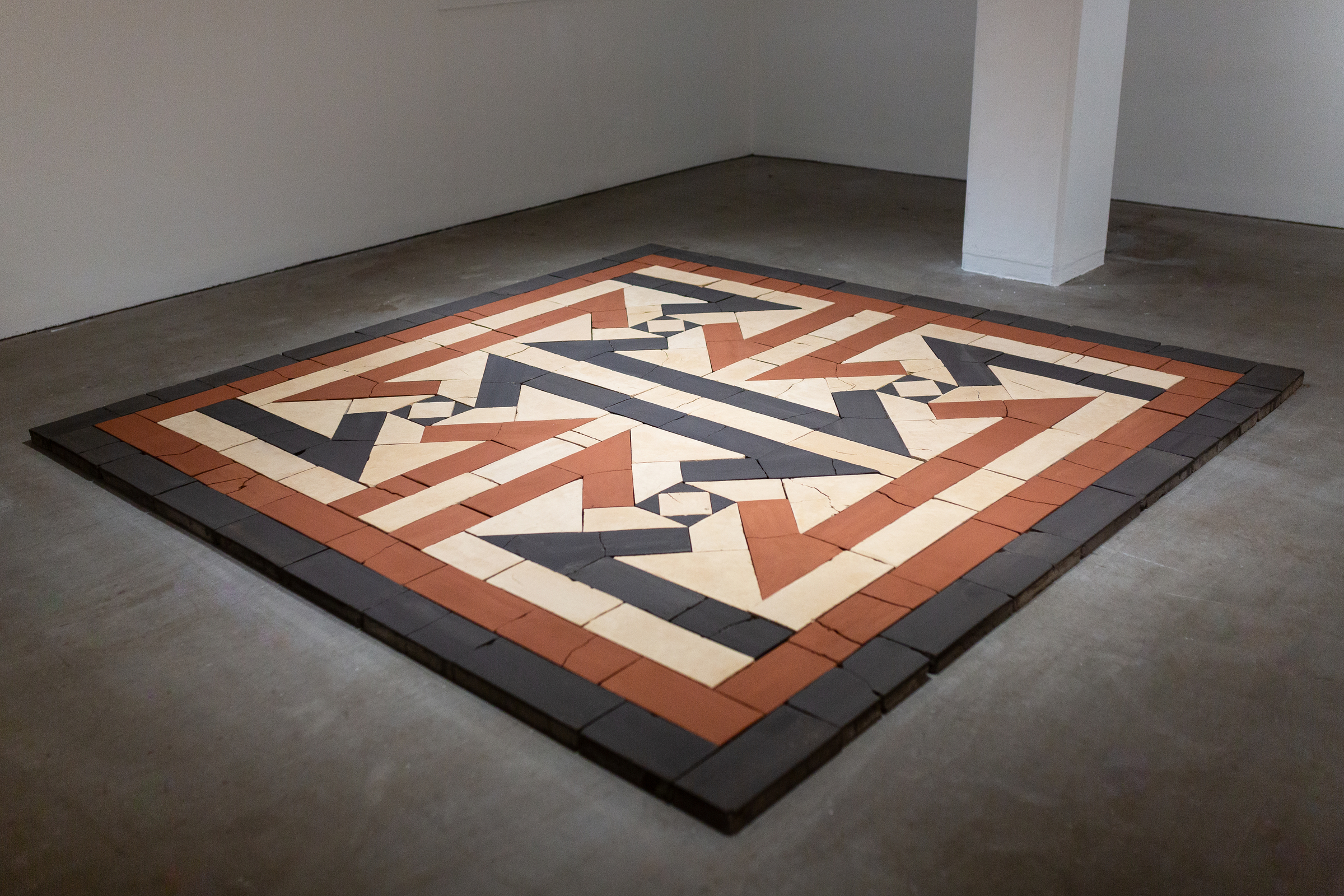
Exhibition view of 'Dana Awartani: Standing by the Ruins' at Arnolfini, Bristol, UK, 28 June – 28 September 2025 © Dana Awartani, Courtesy Lisson Gallery, Photography by Lisa Whiting
Dana Awartani
Saudi Pavilion, 61st International Art Exhibition of La Biennale di Venezia, Venice
9 May – 22 November 2026
The National Pavilion of Saudi Arabia at the 61st International Art Exhibition of La Biennale di Venezia, commissioned by the Visual Arts Commission of the Ministry of Culture, will open on 9 May with Dana Awartani’s May your tears never dry, you who weep over stones, curated by Antonia Carver, with assistant curator Hafsa Alkhudairi.
The commission is Awartani’s most ambitious to date. Building on her training in geometric art forms, the work draws on ancient mosaic traditions. Taking her practice to new levels of complexity in collaborative process and material execution, it is the result of in-depth research into places across the Arab world that have been subjected to devastating damage in recent years, and which are under threat from man-made conflict and violence.
From mosques to ancient palaces, including archaeological sites such as a necropolis and caravansary, the piece references twenty-three places of living and historical significance, each of which holds immeasurable cultural and material importance, recognized by UNESCO, the World Monuments Fund, ALIPH Foundation, and other public bodies that seek to preserve their threatened legacies.
The installation encompasses the entire floor of the pavilion, assembling mosaic references from across Syria, Lebanon, and Palestine whose shared motifs and traditions highlight common cultures spanning some three millennia. As visitors step into and traverse the imagined archaeological site, they encounter highly detailed geometric, floral, and faunal designs of extraordinary intricacy and material fragility. Eschewing binding agents, the bricks crack as they dry, conveying the potential loss of shared histories. This engagement with mosaics – a medium originating in Mesopotamia and sustained through Greek, Roman, Byzantine, and modern contexts – recontextualizes imperiled histories within a contemporary setting, speaking to a collective heritage that transcends borders.
Created over more than 30,000 artisan hours, the piece references the concept within master-craft contexts of “many hands.” A celebration of co-authorship and transmission of collective skill and knowledge, Awartani’s process is an act of preservation through this living heritage of making, which is also under threat due to both automation and the displacement of communities.
Awartani’s practice embeds this collaboration with master artisans, recognizing their indispensable role as custodians of ancestral knowledge over centuries. For the National Pavilion of Saudi Arabia, the work is also a collaboration with the Saudi context: working with thirty-two artisans at a studio site in the mountains outside Riyadh, the artist sourced four differently hued clay earths from distinct geographies across the Kingdom to create over 29,000 sunbaked clay earth bricks.
May your tears never dry, you who weep over stones is a plea to audiences that borrows from classical Arabic poetry, an extension of the artist’s practice and her rich layering of cultural references, where pausing before ruins is an active, contemplative act that summons memory, loss, and the continuity of time. Playing with notions of empathy for and solidarity with people who maintain a connection with the past and care for material heritage, it also centers materiality and organic matter – including the clay, earth, and stone used inAwartani’s work – as a constant over millennia through cycles of environmental and man-made destruction and creation.
Dana Awartani said: “These sites are not merely stones – they are vessels that carry our stories and identities across time. The work is a composite of many sites that are and have been under attack, and which hold significant shared histories that surpass contemporary borders. Just as mosaics arose in Mesopotamia and were adopted across cultures over centuries, including in Venice, material and cultural evidence demonstrate that our histories are much more interconnected than many appreciate. I invite viewers to join me as active participants in a process of self-inquiry into how we think about cultural heritage, its destruction, and its preservation.
It has also been a huge privilege to work with a community of so many deeply talented master craftspeople to realize the project. Preserving the intangible heritages that they carry is central to my practice, and the National Pavilion of Saudi Arabia supporting me to spotlight that on the international stage of La Biennale di Venezia means the world. I hope this exhibition highlights the urgency of preserving and protecting cultural heritage as a shared inheritance.”
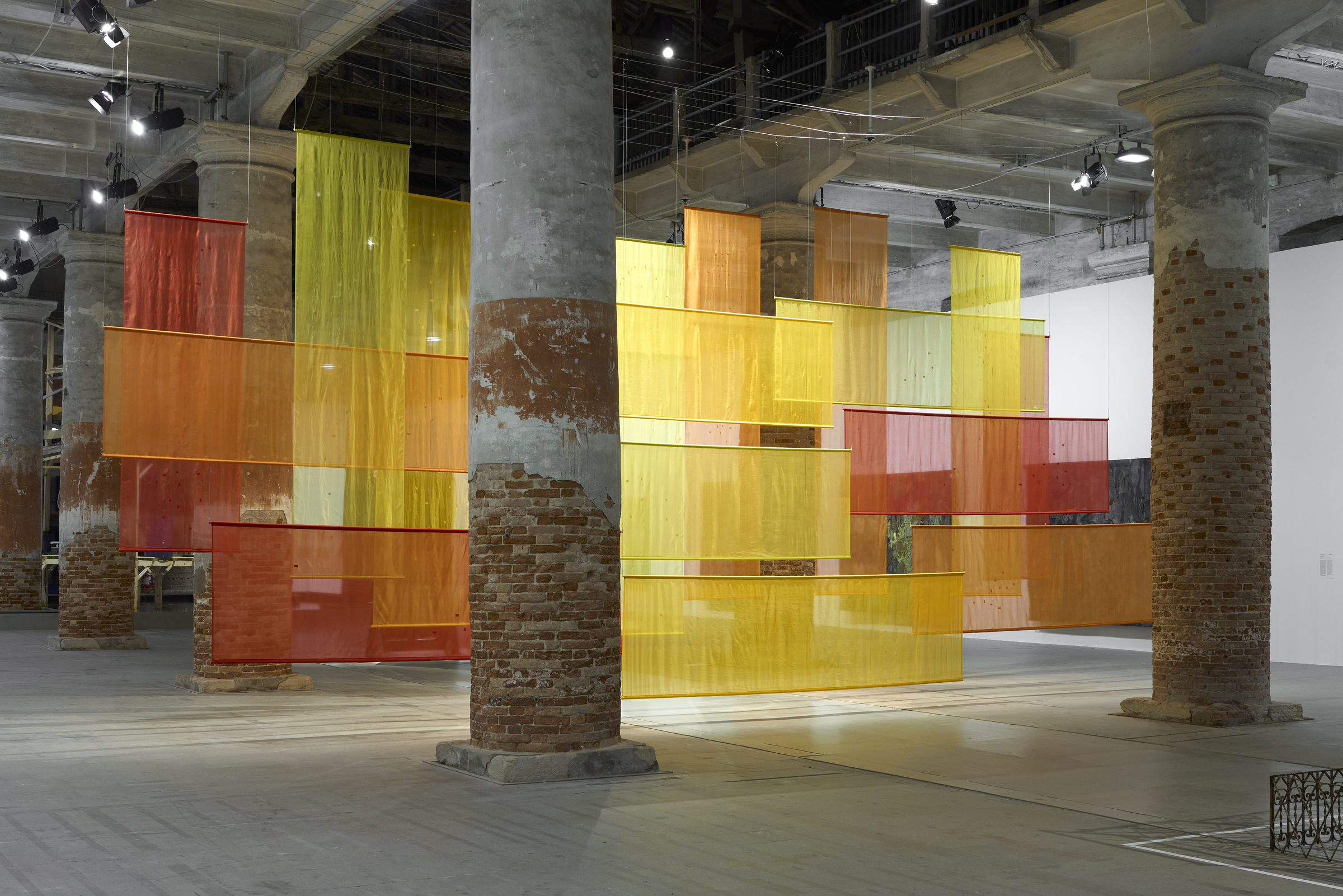
Come, let me heal your wounds. Let me mend your broken bones commissioned for the Venice Biennale in 2024 © Dana Awartani, Courtesy Lisson Gallery, Photography by Samuele Cherubini.
Dana Awartani
Saudi Pavilion, 61st International Art Exhibition of La Biennale di Venezia, Venice
9 May – 22 November 2026
The National Pavilion of Saudi Arabia at the 61st International Art Exhibition of La Biennale di Venezia, commissioned by the Visual Arts Commission of the Ministry of Culture, will open on 9 May with Dana Awartani’s May your tears never dry, you who weep over stones, curated by Antonia Carver, with assistant curator Hafsa Alkhudairi.
The commission is Awartani’s most ambitious to date. Building on her training in geometric art forms, the work draws on ancient mosaic traditions. Taking her practice to new levels of complexity in collaborative process and material execution, it is the result of in-depth research into places across the Arab world that have been subjected to devastating damage in recent years, and which are under threat from man-made conflict and violence.
From mosques to ancient palaces, including archaeological sites such as a necropolis and caravansary, the piece references twenty-three places of living and historical significance, each of which holds immeasurable cultural and material importance, recognized by UNESCO, the World Monuments Fund, ALIPH Foundation, and other public bodies that seek to preserve their threatened legacies.
The installation encompasses the entire floor of the pavilion, assembling mosaic references from across Syria, Lebanon, and Palestine whose shared motifs and traditions highlight common cultures spanning some three millennia. As visitors step into and traverse the imagined archaeological site, they encounter highly detailed geometric, floral, and faunal designs of extraordinary intricacy and material fragility. Eschewing binding agents, the bricks crack as they dry, conveying the potential loss of shared histories. This engagement with mosaics – a medium originating in Mesopotamia and sustained through Greek, Roman, Byzantine, and modern contexts – recontextualizes imperiled histories within a contemporary setting, speaking to a collective heritage that transcends borders.
Created over more than 30,000 artisan hours, the piece references the concept within master-craft contexts of “many hands.” A celebration of co-authorship and transmission of collective skill and knowledge, Awartani’s process is an act of preservation through this living heritage of making, which is also under threat due to both automation and the displacement of communities.
Awartani’s practice embeds this collaboration with master artisans, recognizing their indispensable role as custodians of ancestral knowledge over centuries. For the National Pavilion of Saudi Arabia, the work is also a collaboration with the Saudi context: working with thirty-two artisans at a studio site in the mountains outside Riyadh, the artist sourced four differently hued clay earths from distinct geographies across the Kingdom to create over 29,000 sunbaked clay earth bricks.
May your tears never dry, you who weep over stones is a plea to audiences that borrows from classical Arabic poetry, an extension of the artist’s practice and her rich layering of cultural references, where pausing before ruins is an active, contemplative act that summons memory, loss, and the continuity of time. Playing with notions of empathy for and solidarity with people who maintain a connection with the past and care for material heritage, it also centers materiality and organic matter – including the clay, earth, and stone used inAwartani’s work – as a constant over millennia through cycles of environmental and man-made destruction and creation.
Dana Awartani said: “These sites are not merely stones – they are vessels that carry our stories and identities across time. The work is a composite of many sites that are and have been under attack, and which hold significant shared histories that surpass contemporary borders. Just as mosaics arose in Mesopotamia and were adopted across cultures over centuries, including in Venice, material and cultural evidence demonstrate that our histories are much more interconnected than many appreciate. I invite viewers to join me as active participants in a process of self-inquiry into how we think about cultural heritage, its destruction, and its preservation.
It has also been a huge privilege to work with a community of so many deeply talented master craftspeople to realize the project. Preserving the intangible heritages that they carry is central to my practice, and the National Pavilion of Saudi Arabia supporting me to spotlight that on the international stage of La Biennale di Venezia means the world. I hope this exhibition highlights the urgency of preserving and protecting cultural heritage as a shared inheritance.”
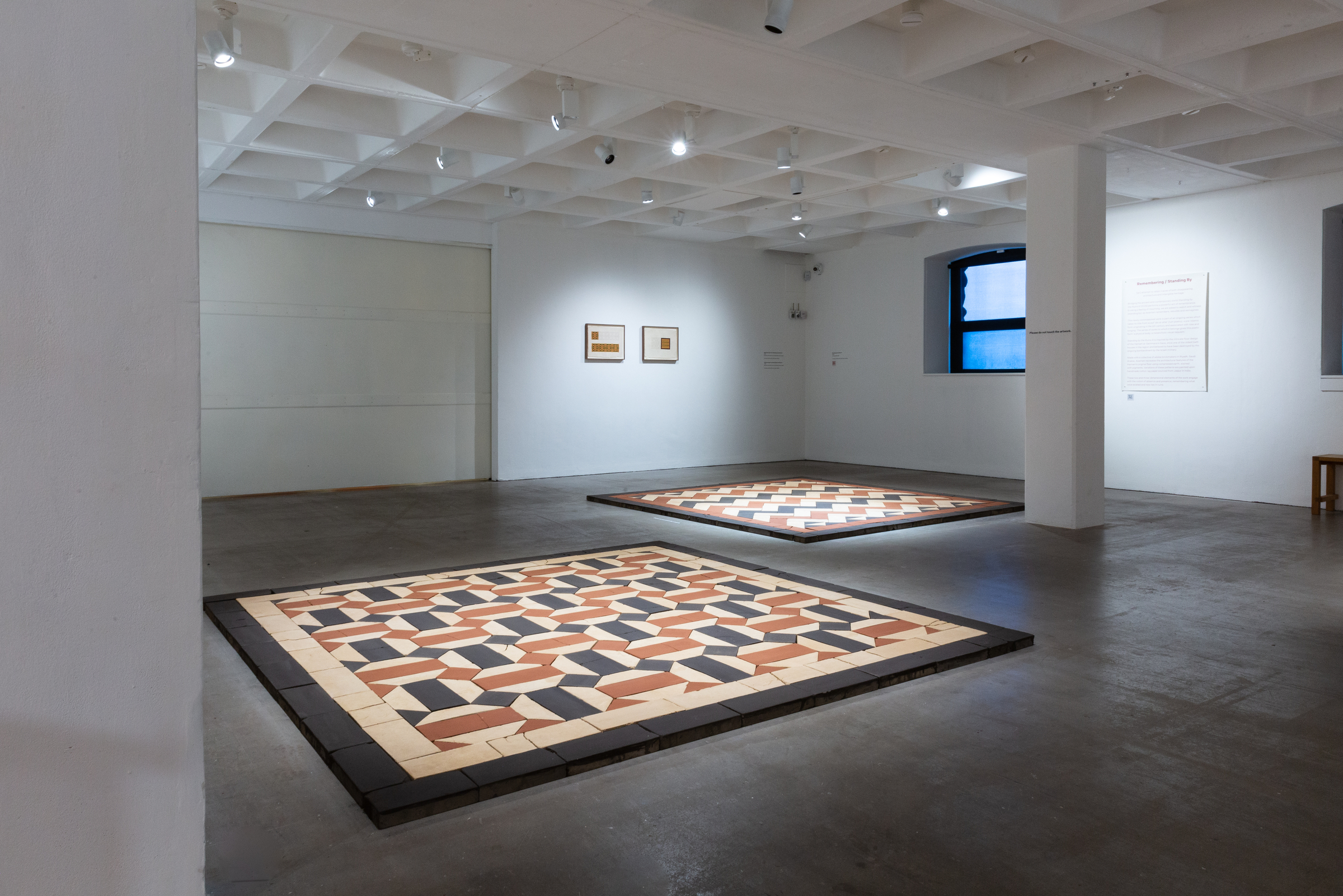
Exhibition view of 'Dana Awartani: Standing by the Ruins' at Arnolfini, Bristol, UK, 28 June – 28 September 2025 © Dana Awartani, Courtesy Lisson Gallery, Photography by Lisa Whiting
Dana Awartani
Saudi Pavilion, 61st International Art Exhibition of La Biennale di Venezia, Venice
9 May – 22 November 2026
The National Pavilion of Saudi Arabia at the 61st International Art Exhibition of La Biennale di Venezia, commissioned by the Visual Arts Commission of the Ministry of Culture, will open on 9 May with Dana Awartani’s May your tears never dry, you who weep over stones, curated by Antonia Carver, with assistant curator Hafsa Alkhudairi.
The commission is Awartani’s most ambitious to date. Building on her training in geometric art forms, the work draws on ancient mosaic traditions. Taking her practice to new levels of complexity in collaborative process and material execution, it is the result of in-depth research into places across the Arab world that have been subjected to devastating damage in recent years, and which are under threat from man-made conflict and violence.
From mosques to ancient palaces, including archaeological sites such as a necropolis and caravansary, the piece references twenty-three places of living and historical significance, each of which holds immeasurable cultural and material importance, recognized by UNESCO, the World Monuments Fund, ALIPH Foundation, and other public bodies that seek to preserve their threatened legacies.
The installation encompasses the entire floor of the pavilion, assembling mosaic references from across Syria, Lebanon, and Palestine whose shared motifs and traditions highlight common cultures spanning some three millennia. As visitors step into and traverse the imagined archaeological site, they encounter highly detailed geometric, floral, and faunal designs of extraordinary intricacy and material fragility. Eschewing binding agents, the bricks crack as they dry, conveying the potential loss of shared histories. This engagement with mosaics – a medium originating in Mesopotamia and sustained through Greek, Roman, Byzantine, and modern contexts – recontextualizes imperiled histories within a contemporary setting, speaking to a collective heritage that transcends borders.
Created over more than 30,000 artisan hours, the piece references the concept within master-craft contexts of “many hands.” A celebration of co-authorship and transmission of collective skill and knowledge, Awartani’s process is an act of preservation through this living heritage of making, which is also under threat due to both automation and the displacement of communities.
Awartani’s practice embeds this collaboration with master artisans, recognizing their indispensable role as custodians of ancestral knowledge over centuries. For the National Pavilion of Saudi Arabia, the work is also a collaboration with the Saudi context: working with thirty-two artisans at a studio site in the mountains outside Riyadh, the artist sourced four differently hued clay earths from distinct geographies across the Kingdom to create over 29,000 sunbaked clay earth bricks.
May your tears never dry, you who weep over stones is a plea to audiences that borrows from classical Arabic poetry, an extension of the artist’s practice and her rich layering of cultural references, where pausing before ruins is an active, contemplative act that summons memory, loss, and the continuity of time. Playing with notions of empathy for and solidarity with people who maintain a connection with the past and care for material heritage, it also centers materiality and organic matter – including the clay, earth, and stone used inAwartani’s work – as a constant over millennia through cycles of environmental and man-made destruction and creation.
Dana Awartani said: “These sites are not merely stones – they are vessels that carry our stories and identities across time. The work is a composite of many sites that are and have been under attack, and which hold significant shared histories that surpass contemporary borders. Just as mosaics arose in Mesopotamia and were adopted across cultures over centuries, including in Venice, material and cultural evidence demonstrate that our histories are much more interconnected than many appreciate. I invite viewers to join me as active participants in a process of self-inquiry into how we think about cultural heritage, its destruction, and its preservation.
It has also been a huge privilege to work with a community of so many deeply talented master craftspeople to realize the project. Preserving the intangible heritages that they carry is central to my practice, and the National Pavilion of Saudi Arabia supporting me to spotlight that on the international stage of La Biennale di Venezia means the world. I hope this exhibition highlights the urgency of preserving and protecting cultural heritage as a shared inheritance.”
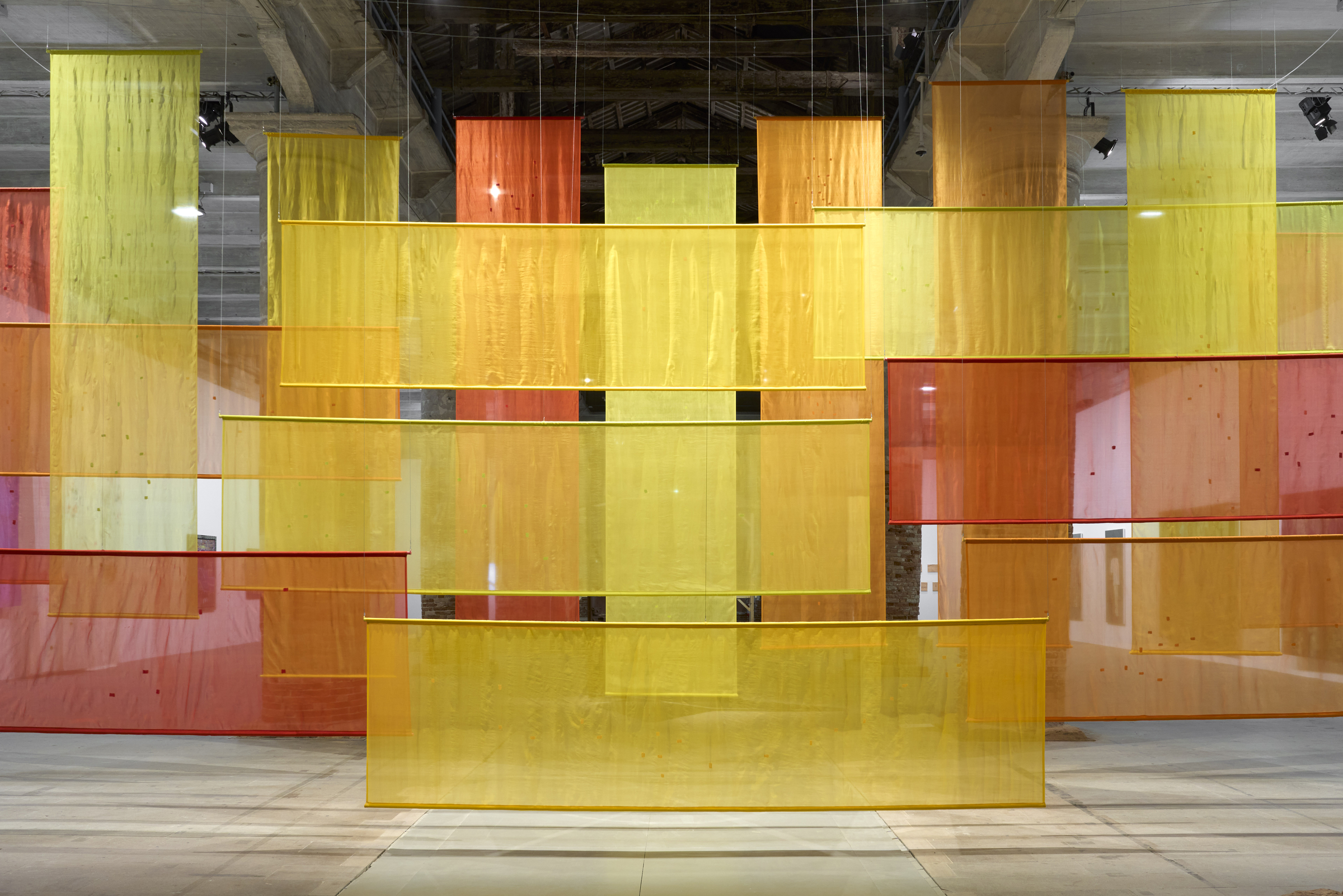
Come, let me heal your wounds. Let me mend your broken bones commissioned for the Venice Biennale in 2024 © Dana Awartani, Courtesy Lisson Gallery, Photography by Samuele Cherubini.
Dana Awartani
Saudi Pavilion, 61st International Art Exhibition of La Biennale di Venezia, Venice
9 May – 22 November 2026
The National Pavilion of Saudi Arabia at the 61st International Art Exhibition of La Biennale di Venezia, commissioned by the Visual Arts Commission of the Ministry of Culture, will open on 9 May with Dana Awartani’s May your tears never dry, you who weep over stones, curated by Antonia Carver, with assistant curator Hafsa Alkhudairi.
The commission is Awartani’s most ambitious to date. Building on her training in geometric art forms, the work draws on ancient mosaic traditions. Taking her practice to new levels of complexity in collaborative process and material execution, it is the result of in-depth research into places across the Arab world that have been subjected to devastating damage in recent years, and which are under threat from man-made conflict and violence.
From mosques to ancient palaces, including archaeological sites such as a necropolis and caravansary, the piece references twenty-three places of living and historical significance, each of which holds immeasurable cultural and material importance, recognized by UNESCO, the World Monuments Fund, ALIPH Foundation, and other public bodies that seek to preserve their threatened legacies.
The installation encompasses the entire floor of the pavilion, assembling mosaic references from across Syria, Lebanon, and Palestine whose shared motifs and traditions highlight common cultures spanning some three millennia. As visitors step into and traverse the imagined archaeological site, they encounter highly detailed geometric, floral, and faunal designs of extraordinary intricacy and material fragility. Eschewing binding agents, the bricks crack as they dry, conveying the potential loss of shared histories. This engagement with mosaics – a medium originating in Mesopotamia and sustained through Greek, Roman, Byzantine, and modern contexts – recontextualizes imperiled histories within a contemporary setting, speaking to a collective heritage that transcends borders.
Created over more than 30,000 artisan hours, the piece references the concept within master-craft contexts of “many hands.” A celebration of co-authorship and transmission of collective skill and knowledge, Awartani’s process is an act of preservation through this living heritage of making, which is also under threat due to both automation and the displacement of communities.
Awartani’s practice embeds this collaboration with master artisans, recognizing their indispensable role as custodians of ancestral knowledge over centuries. For the National Pavilion of Saudi Arabia, the work is also a collaboration with the Saudi context: working with thirty-two artisans at a studio site in the mountains outside Riyadh, the artist sourced four differently hued clay earths from distinct geographies across the Kingdom to create over 29,000 sunbaked clay earth bricks.
May your tears never dry, you who weep over stones is a plea to audiences that borrows from classical Arabic poetry, an extension of the artist’s practice and her rich layering of cultural references, where pausing before ruins is an active, contemplative act that summons memory, loss, and the continuity of time. Playing with notions of empathy for and solidarity with people who maintain a connection with the past and care for material heritage, it also centers materiality and organic matter – including the clay, earth, and stone used inAwartani’s work – as a constant over millennia through cycles of environmental and man-made destruction and creation.
Dana Awartani said: “These sites are not merely stones – they are vessels that carry our stories and identities across time. The work is a composite of many sites that are and have been under attack, and which hold significant shared histories that surpass contemporary borders. Just as mosaics arose in Mesopotamia and were adopted across cultures over centuries, including in Venice, material and cultural evidence demonstrate that our histories are much more interconnected than many appreciate. I invite viewers to join me as active participants in a process of self-inquiry into how we think about cultural heritage, its destruction, and its preservation.
It has also been a huge privilege to work with a community of so many deeply talented master craftspeople to realize the project. Preserving the intangible heritages that they carry is central to my practice, and the National Pavilion of Saudi Arabia supporting me to spotlight that on the international stage of La Biennale di Venezia means the world. I hope this exhibition highlights the urgency of preserving and protecting cultural heritage as a shared inheritance.”
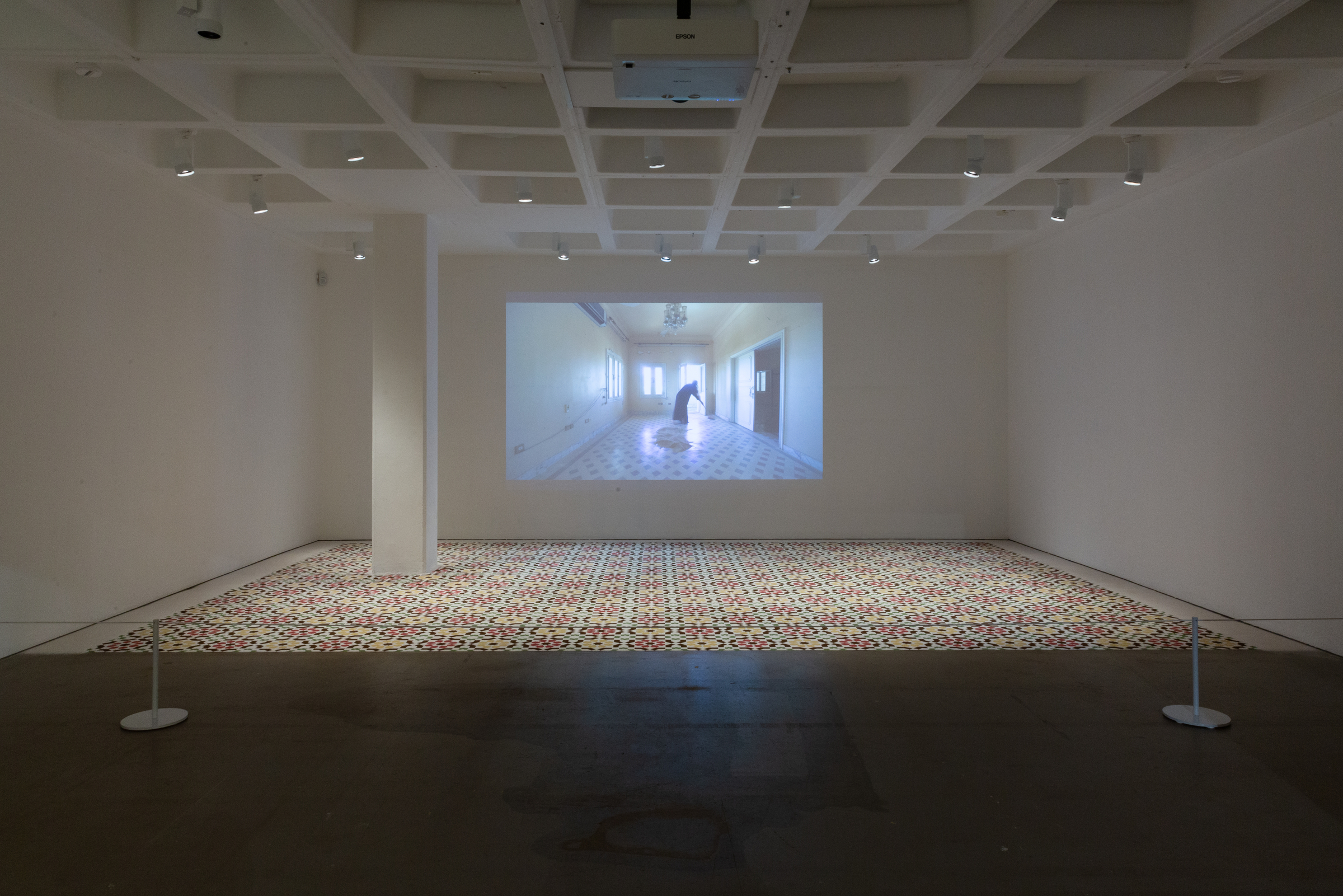
Exhibition view of 'Dana Awartani: Standing by the Ruins' at Arnolfini, Bristol, UK, 28 June – 28 September 2025 © Dana Awartani, Courtesy Lisson Gallery, Photography by Lisa Whiting
Dana Awartani
Saudi Pavilion, 61st International Art Exhibition of La Biennale di Venezia, Venice
9 May – 22 November 2026
The National Pavilion of Saudi Arabia at the 61st International Art Exhibition of La Biennale di Venezia, commissioned by the Visual Arts Commission of the Ministry of Culture, will open on 9 May with Dana Awartani’s May your tears never dry, you who weep over stones, curated by Antonia Carver, with assistant curator Hafsa Alkhudairi.
The commission is Awartani’s most ambitious to date. Building on her training in geometric art forms, the work draws on ancient mosaic traditions. Taking her practice to new levels of complexity in collaborative process and material execution, it is the result of in-depth research into places across the Arab world that have been subjected to devastating damage in recent years, and which are under threat from man-made conflict and violence.
From mosques to ancient palaces, including archaeological sites such as a necropolis and caravansary, the piece references twenty-three places of living and historical significance, each of which holds immeasurable cultural and material importance, recognized by UNESCO, the World Monuments Fund, ALIPH Foundation, and other public bodies that seek to preserve their threatened legacies.
The installation encompasses the entire floor of the pavilion, assembling mosaic references from across Syria, Lebanon, and Palestine whose shared motifs and traditions highlight common cultures spanning some three millennia. As visitors step into and traverse the imagined archaeological site, they encounter highly detailed geometric, floral, and faunal designs of extraordinary intricacy and material fragility. Eschewing binding agents, the bricks crack as they dry, conveying the potential loss of shared histories. This engagement with mosaics – a medium originating in Mesopotamia and sustained through Greek, Roman, Byzantine, and modern contexts – recontextualizes imperiled histories within a contemporary setting, speaking to a collective heritage that transcends borders.
Created over more than 30,000 artisan hours, the piece references the concept within master-craft contexts of “many hands.” A celebration of co-authorship and transmission of collective skill and knowledge, Awartani’s process is an act of preservation through this living heritage of making, which is also under threat due to both automation and the displacement of communities.
Awartani’s practice embeds this collaboration with master artisans, recognizing their indispensable role as custodians of ancestral knowledge over centuries. For the National Pavilion of Saudi Arabia, the work is also a collaboration with the Saudi context: working with thirty-two artisans at a studio site in the mountains outside Riyadh, the artist sourced four differently hued clay earths from distinct geographies across the Kingdom to create over 29,000 sunbaked clay earth bricks.
May your tears never dry, you who weep over stones is a plea to audiences that borrows from classical Arabic poetry, an extension of the artist’s practice and her rich layering of cultural references, where pausing before ruins is an active, contemplative act that summons memory, loss, and the continuity of time. Playing with notions of empathy for and solidarity with people who maintain a connection with the past and care for material heritage, it also centers materiality and organic matter – including the clay, earth, and stone used inAwartani’s work – as a constant over millennia through cycles of environmental and man-made destruction and creation.
Dana Awartani said: “These sites are not merely stones – they are vessels that carry our stories and identities across time. The work is a composite of many sites that are and have been under attack, and which hold significant shared histories that surpass contemporary borders. Just as mosaics arose in Mesopotamia and were adopted across cultures over centuries, including in Venice, material and cultural evidence demonstrate that our histories are much more interconnected than many appreciate. I invite viewers to join me as active participants in a process of self-inquiry into how we think about cultural heritage, its destruction, and its preservation.
It has also been a huge privilege to work with a community of so many deeply talented master craftspeople to realize the project. Preserving the intangible heritages that they carry is central to my practice, and the National Pavilion of Saudi Arabia supporting me to spotlight that on the international stage of La Biennale di Venezia means the world. I hope this exhibition highlights the urgency of preserving and protecting cultural heritage as a shared inheritance.”
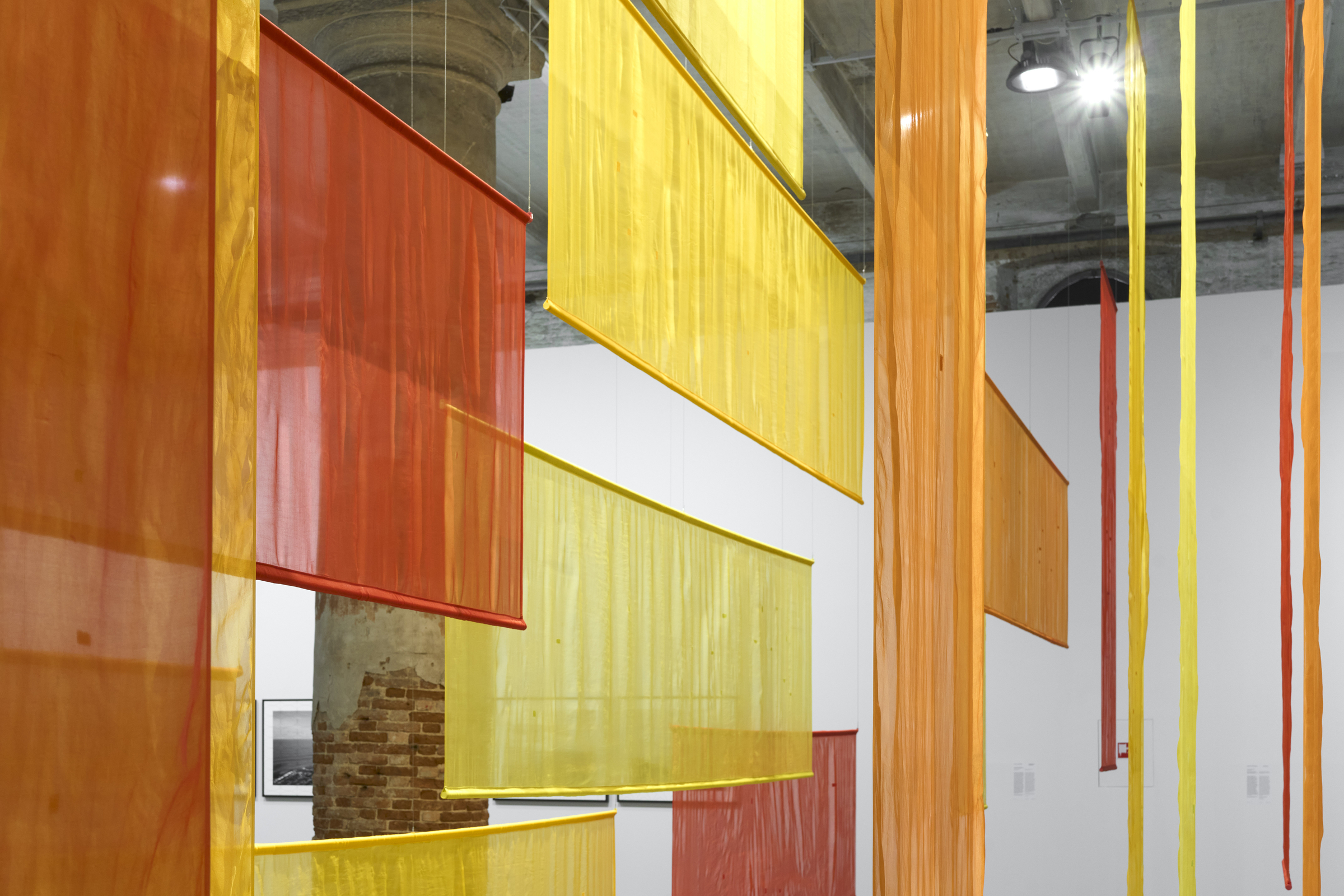
Come, let me heal your wounds. Let me mend your broken bones commissioned for the Venice Biennale in 2024 © Dana Awartani, Courtesy Lisson Gallery, Photography by Samuele Cherubini.
Dana Awartani
Saudi Pavilion, 61st International Art Exhibition of La Biennale di Venezia, Venice
9 May – 22 November 2026
The National Pavilion of Saudi Arabia at the 61st International Art Exhibition of La Biennale di Venezia, commissioned by the Visual Arts Commission of the Ministry of Culture, will open on 9 May with Dana Awartani’s May your tears never dry, you who weep over stones, curated by Antonia Carver, with assistant curator Hafsa Alkhudairi.
The commission is Awartani’s most ambitious to date. Building on her training in geometric art forms, the work draws on ancient mosaic traditions. Taking her practice to new levels of complexity in collaborative process and material execution, it is the result of in-depth research into places across the Arab world that have been subjected to devastating damage in recent years, and which are under threat from man-made conflict and violence.
From mosques to ancient palaces, including archaeological sites such as a necropolis and caravansary, the piece references twenty-three places of living and historical significance, each of which holds immeasurable cultural and material importance, recognized by UNESCO, the World Monuments Fund, ALIPH Foundation, and other public bodies that seek to preserve their threatened legacies.
The installation encompasses the entire floor of the pavilion, assembling mosaic references from across Syria, Lebanon, and Palestine whose shared motifs and traditions highlight common cultures spanning some three millennia. As visitors step into and traverse the imagined archaeological site, they encounter highly detailed geometric, floral, and faunal designs of extraordinary intricacy and material fragility. Eschewing binding agents, the bricks crack as they dry, conveying the potential loss of shared histories. This engagement with mosaics – a medium originating in Mesopotamia and sustained through Greek, Roman, Byzantine, and modern contexts – recontextualizes imperiled histories within a contemporary setting, speaking to a collective heritage that transcends borders.
Created over more than 30,000 artisan hours, the piece references the concept within master-craft contexts of “many hands.” A celebration of co-authorship and transmission of collective skill and knowledge, Awartani’s process is an act of preservation through this living heritage of making, which is also under threat due to both automation and the displacement of communities.
Awartani’s practice embeds this collaboration with master artisans, recognizing their indispensable role as custodians of ancestral knowledge over centuries. For the National Pavilion of Saudi Arabia, the work is also a collaboration with the Saudi context: working with thirty-two artisans at a studio site in the mountains outside Riyadh, the artist sourced four differently hued clay earths from distinct geographies across the Kingdom to create over 29,000 sunbaked clay earth bricks.
May your tears never dry, you who weep over stones is a plea to audiences that borrows from classical Arabic poetry, an extension of the artist’s practice and her rich layering of cultural references, where pausing before ruins is an active, contemplative act that summons memory, loss, and the continuity of time. Playing with notions of empathy for and solidarity with people who maintain a connection with the past and care for material heritage, it also centers materiality and organic matter – including the clay, earth, and stone used inAwartani’s work – as a constant over millennia through cycles of environmental and man-made destruction and creation.
Dana Awartani said: “These sites are not merely stones – they are vessels that carry our stories and identities across time. The work is a composite of many sites that are and have been under attack, and which hold significant shared histories that surpass contemporary borders. Just as mosaics arose in Mesopotamia and were adopted across cultures over centuries, including in Venice, material and cultural evidence demonstrate that our histories are much more interconnected than many appreciate. I invite viewers to join me as active participants in a process of self-inquiry into how we think about cultural heritage, its destruction, and its preservation.
It has also been a huge privilege to work with a community of so many deeply talented master craftspeople to realize the project. Preserving the intangible heritages that they carry is central to my practice, and the National Pavilion of Saudi Arabia supporting me to spotlight that on the international stage of La Biennale di Venezia means the world. I hope this exhibition highlights the urgency of preserving and protecting cultural heritage as a shared inheritance.”
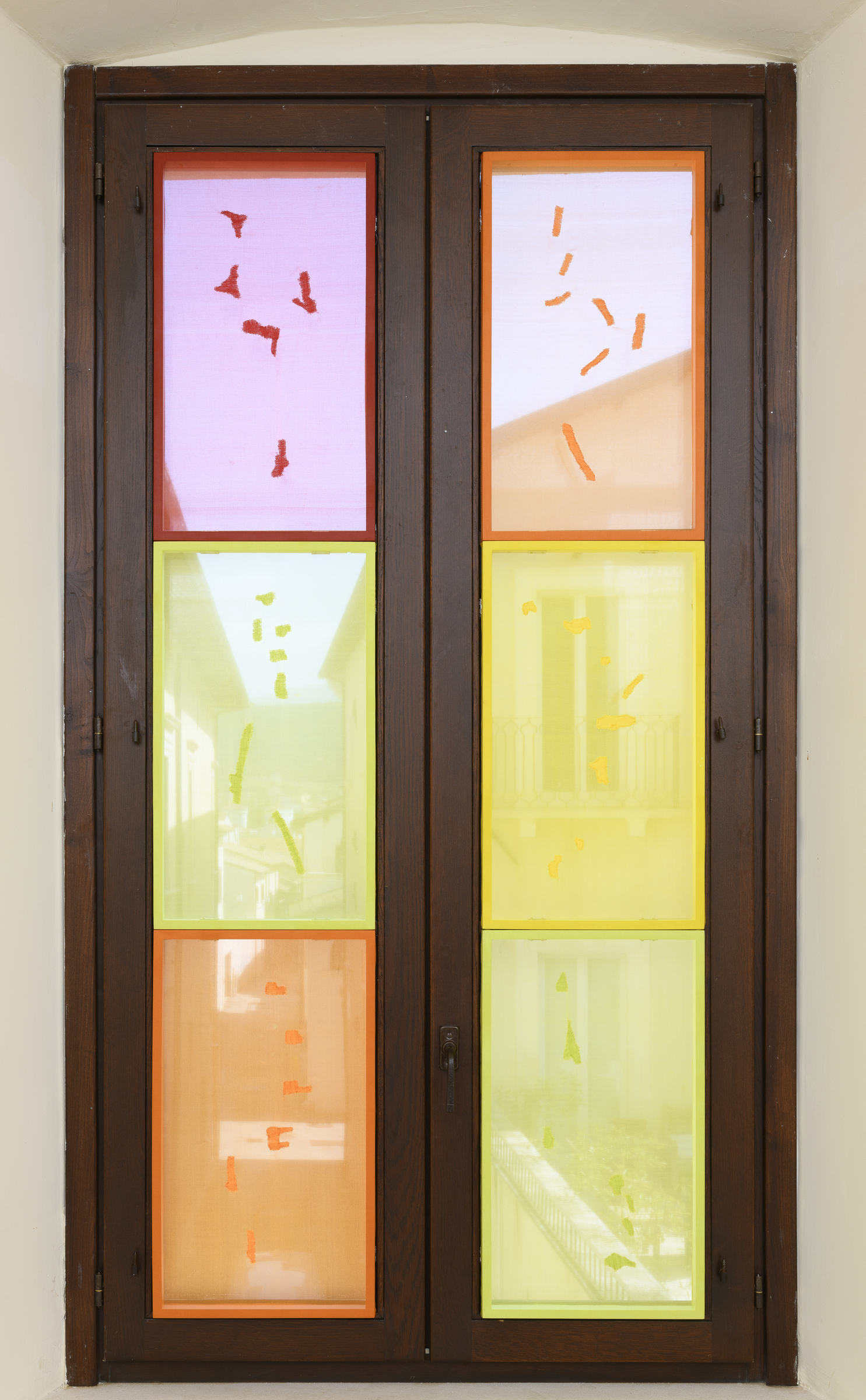
Installation View of Dana Awartani, Let me mend your broken bones, 2024 in ‘True Colors: Textiles: motions, colors, and identities’ at MAXXI L’Aquila, Italy, 7 June – 17 November 2025, © Dana Awartani, Courtesy MAXXI. Photography by Giorgio Benni.
Dana Awartani
Saudi Pavilion, 61st International Art Exhibition of La Biennale di Venezia, Venice
9 May – 22 November 2026
The National Pavilion of Saudi Arabia at the 61st International Art Exhibition of La Biennale di Venezia, commissioned by the Visual Arts Commission of the Ministry of Culture, will open on 9 May with Dana Awartani’s May your tears never dry, you who weep over stones, curated by Antonia Carver, with assistant curator Hafsa Alkhudairi.
The commission is Awartani’s most ambitious to date. Building on her training in geometric art forms, the work draws on ancient mosaic traditions. Taking her practice to new levels of complexity in collaborative process and material execution, it is the result of in-depth research into places across the Arab world that have been subjected to devastating damage in recent years, and which are under threat from man-made conflict and violence.
From mosques to ancient palaces, including archaeological sites such as a necropolis and caravansary, the piece references twenty-three places of living and historical significance, each of which holds immeasurable cultural and material importance, recognized by UNESCO, the World Monuments Fund, ALIPH Foundation, and other public bodies that seek to preserve their threatened legacies.
The installation encompasses the entire floor of the pavilion, assembling mosaic references from across Syria, Lebanon, and Palestine whose shared motifs and traditions highlight common cultures spanning some three millennia. As visitors step into and traverse the imagined archaeological site, they encounter highly detailed geometric, floral, and faunal designs of extraordinary intricacy and material fragility. Eschewing binding agents, the bricks crack as they dry, conveying the potential loss of shared histories. This engagement with mosaics – a medium originating in Mesopotamia and sustained through Greek, Roman, Byzantine, and modern contexts – recontextualizes imperiled histories within a contemporary setting, speaking to a collective heritage that transcends borders.
Created over more than 30,000 artisan hours, the piece references the concept within master-craft contexts of “many hands.” A celebration of co-authorship and transmission of collective skill and knowledge, Awartani’s process is an act of preservation through this living heritage of making, which is also under threat due to both automation and the displacement of communities.
Awartani’s practice embeds this collaboration with master artisans, recognizing their indispensable role as custodians of ancestral knowledge over centuries. For the National Pavilion of Saudi Arabia, the work is also a collaboration with the Saudi context: working with thirty-two artisans at a studio site in the mountains outside Riyadh, the artist sourced four differently hued clay earths from distinct geographies across the Kingdom to create over 29,000 sunbaked clay earth bricks.
May your tears never dry, you who weep over stones is a plea to audiences that borrows from classical Arabic poetry, an extension of the artist’s practice and her rich layering of cultural references, where pausing before ruins is an active, contemplative act that summons memory, loss, and the continuity of time. Playing with notions of empathy for and solidarity with people who maintain a connection with the past and care for material heritage, it also centers materiality and organic matter – including the clay, earth, and stone used inAwartani’s work – as a constant over millennia through cycles of environmental and man-made destruction and creation.
Dana Awartani said: “These sites are not merely stones – they are vessels that carry our stories and identities across time. The work is a composite of many sites that are and have been under attack, and which hold significant shared histories that surpass contemporary borders. Just as mosaics arose in Mesopotamia and were adopted across cultures over centuries, including in Venice, material and cultural evidence demonstrate that our histories are much more interconnected than many appreciate. I invite viewers to join me as active participants in a process of self-inquiry into how we think about cultural heritage, its destruction, and its preservation.
It has also been a huge privilege to work with a community of so many deeply talented master craftspeople to realize the project. Preserving the intangible heritages that they carry is central to my practice, and the National Pavilion of Saudi Arabia supporting me to spotlight that on the international stage of La Biennale di Venezia means the world. I hope this exhibition highlights the urgency of preserving and protecting cultural heritage as a shared inheritance.”
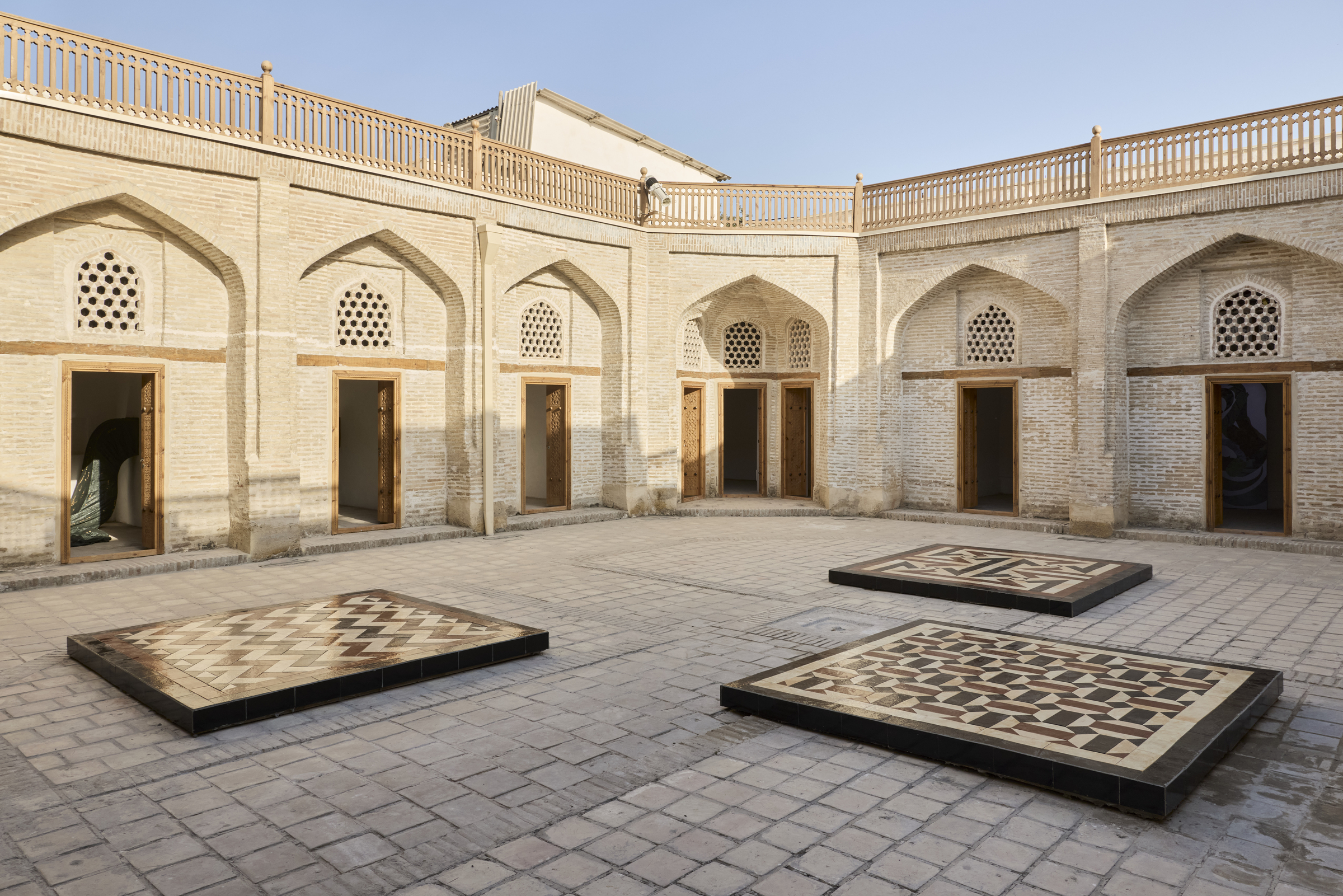
Installation view of Standing by the Ruins IV, Bukhara Biennale, 2025 © Dana Awartani, Photo courtesy of Andrey Arekelyan and Art and Culture Development
Dana Awartani
Saudi Pavilion, 61st International Art Exhibition of La Biennale di Venezia, Venice
9 May – 22 November 2026
The National Pavilion of Saudi Arabia at the 61st International Art Exhibition of La Biennale di Venezia, commissioned by the Visual Arts Commission of the Ministry of Culture, will open on 9 May with Dana Awartani’s May your tears never dry, you who weep over stones, curated by Antonia Carver, with assistant curator Hafsa Alkhudairi.
The commission is Awartani’s most ambitious to date. Building on her training in geometric art forms, the work draws on ancient mosaic traditions. Taking her practice to new levels of complexity in collaborative process and material execution, it is the result of in-depth research into places across the Arab world that have been subjected to devastating damage in recent years, and which are under threat from man-made conflict and violence.
From mosques to ancient palaces, including archaeological sites such as a necropolis and caravansary, the piece references twenty-three places of living and historical significance, each of which holds immeasurable cultural and material importance, recognized by UNESCO, the World Monuments Fund, ALIPH Foundation, and other public bodies that seek to preserve their threatened legacies.
The installation encompasses the entire floor of the pavilion, assembling mosaic references from across Syria, Lebanon, and Palestine whose shared motifs and traditions highlight common cultures spanning some three millennia. As visitors step into and traverse the imagined archaeological site, they encounter highly detailed geometric, floral, and faunal designs of extraordinary intricacy and material fragility. Eschewing binding agents, the bricks crack as they dry, conveying the potential loss of shared histories. This engagement with mosaics – a medium originating in Mesopotamia and sustained through Greek, Roman, Byzantine, and modern contexts – recontextualizes imperiled histories within a contemporary setting, speaking to a collective heritage that transcends borders.
Created over more than 30,000 artisan hours, the piece references the concept within master-craft contexts of “many hands.” A celebration of co-authorship and transmission of collective skill and knowledge, Awartani’s process is an act of preservation through this living heritage of making, which is also under threat due to both automation and the displacement of communities.
Awartani’s practice embeds this collaboration with master artisans, recognizing their indispensable role as custodians of ancestral knowledge over centuries. For the National Pavilion of Saudi Arabia, the work is also a collaboration with the Saudi context: working with thirty-two artisans at a studio site in the mountains outside Riyadh, the artist sourced four differently hued clay earths from distinct geographies across the Kingdom to create over 29,000 sunbaked clay earth bricks.
May your tears never dry, you who weep over stones is a plea to audiences that borrows from classical Arabic poetry, an extension of the artist’s practice and her rich layering of cultural references, where pausing before ruins is an active, contemplative act that summons memory, loss, and the continuity of time. Playing with notions of empathy for and solidarity with people who maintain a connection with the past and care for material heritage, it also centers materiality and organic matter – including the clay, earth, and stone used inAwartani’s work – as a constant over millennia through cycles of environmental and man-made destruction and creation.
Dana Awartani said: “These sites are not merely stones – they are vessels that carry our stories and identities across time. The work is a composite of many sites that are and have been under attack, and which hold significant shared histories that surpass contemporary borders. Just as mosaics arose in Mesopotamia and were adopted across cultures over centuries, including in Venice, material and cultural evidence demonstrate that our histories are much more interconnected than many appreciate. I invite viewers to join me as active participants in a process of self-inquiry into how we think about cultural heritage, its destruction, and its preservation.
It has also been a huge privilege to work with a community of so many deeply talented master craftspeople to realize the project. Preserving the intangible heritages that they carry is central to my practice, and the National Pavilion of Saudi Arabia supporting me to spotlight that on the international stage of La Biennale di Venezia means the world. I hope this exhibition highlights the urgency of preserving and protecting cultural heritage as a shared inheritance.”
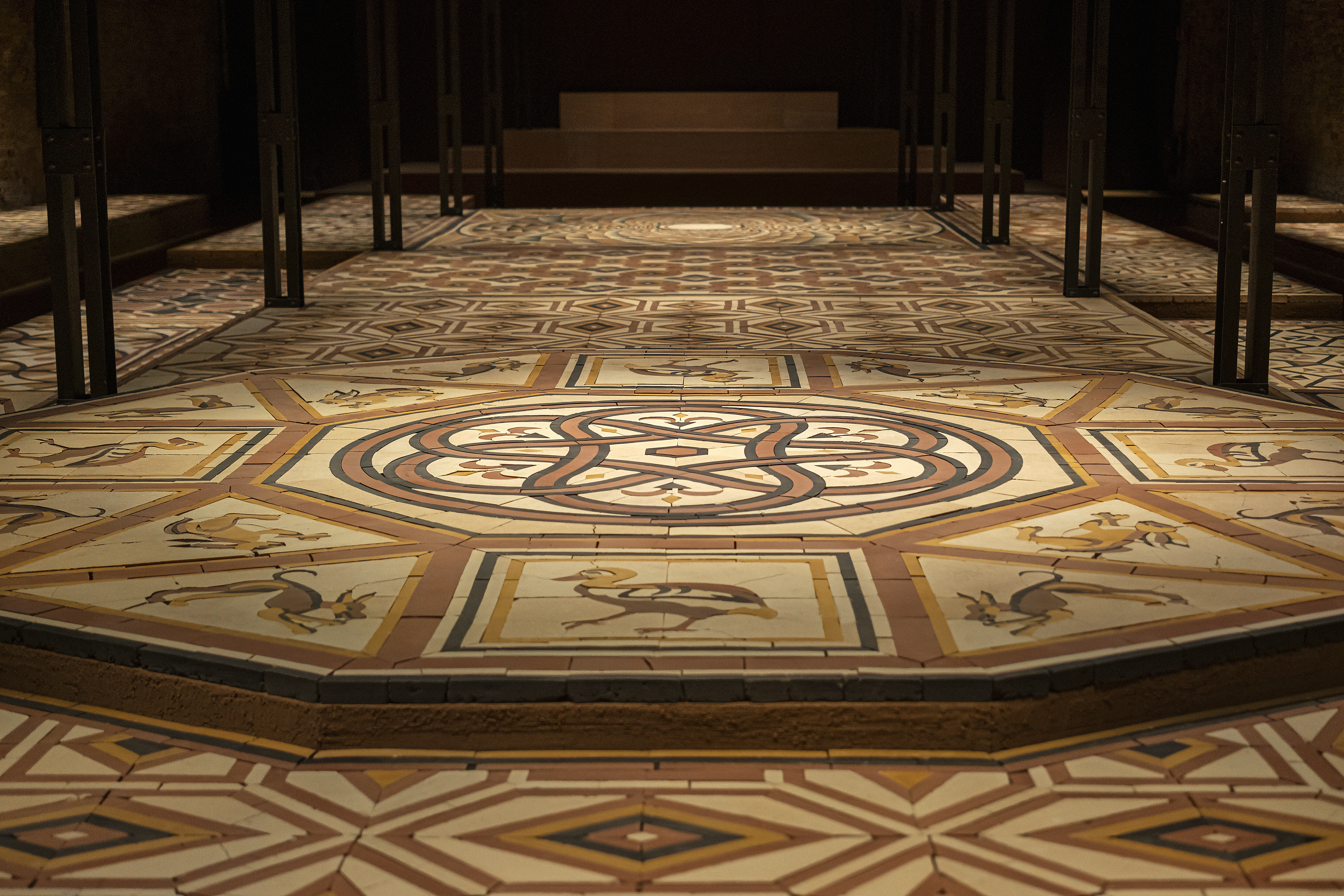
Dana Awartani, May your tears never dry, you who weep over stones. Photo courtesy of the artist and the Visual Arts Commission, Commissioner of the National Pavilion of Saudi Arabia.
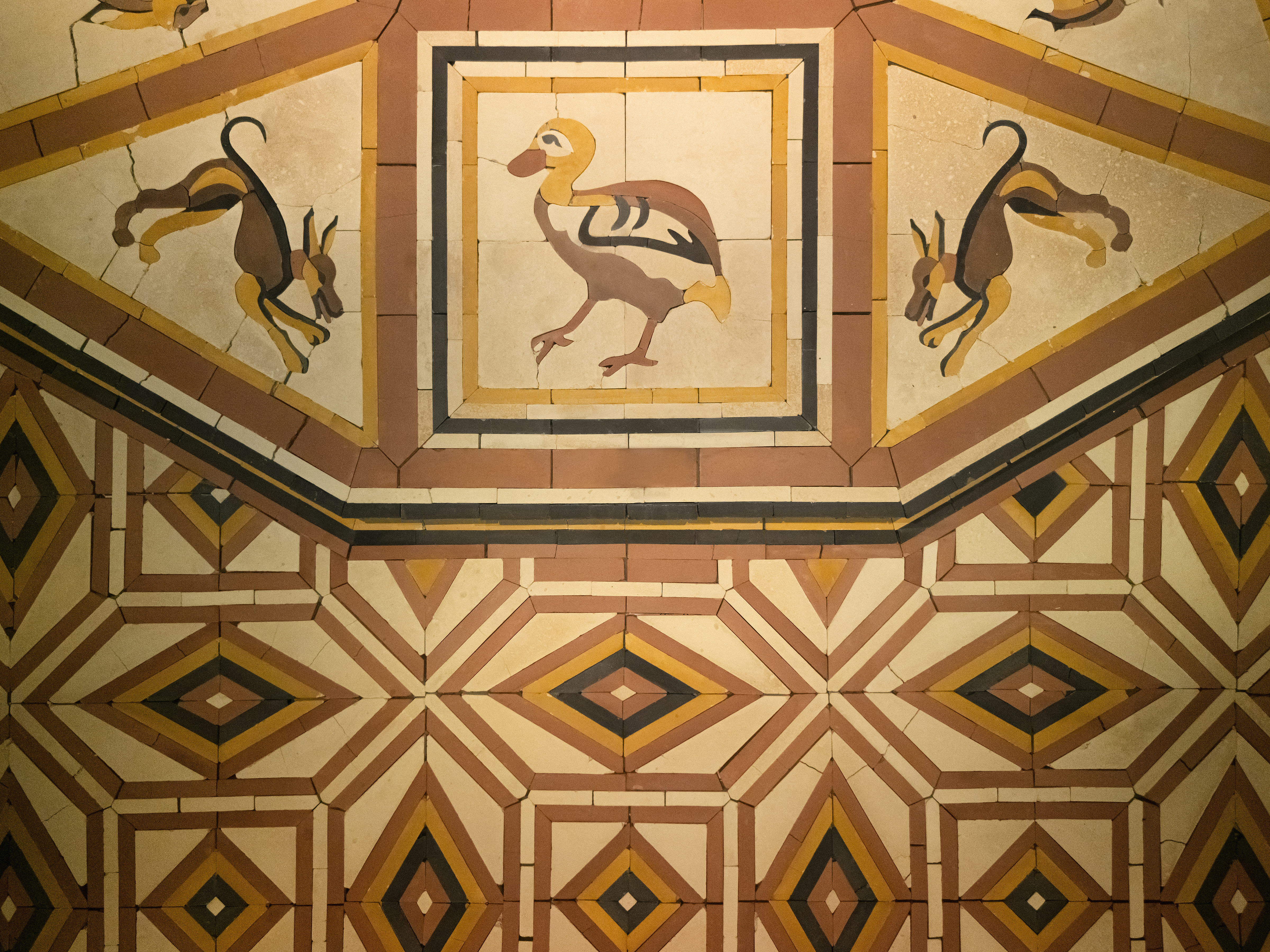
Dana Awartani, May your tears never dry, you who weep over stones. Photo courtesy of the artist and the Visual Arts Commission, Commissioner of the National Pavilion of Saudi Arabia.
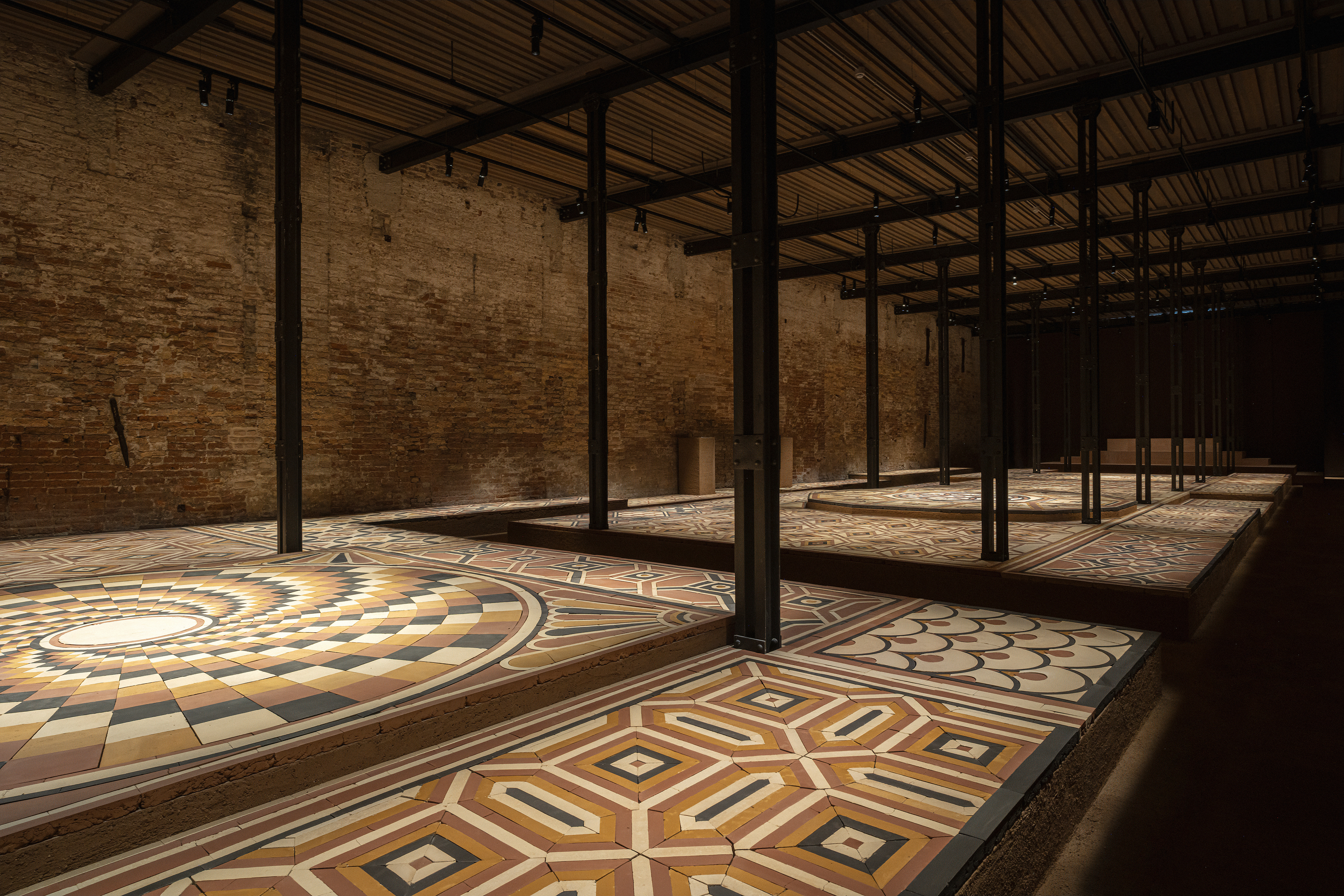
Dana Awartani, May your tears never dry, you who weep over stones. Photo courtesy of the artist and the Visual Arts Commission, Commissioner of the National Pavilion of Saudi Arabia.
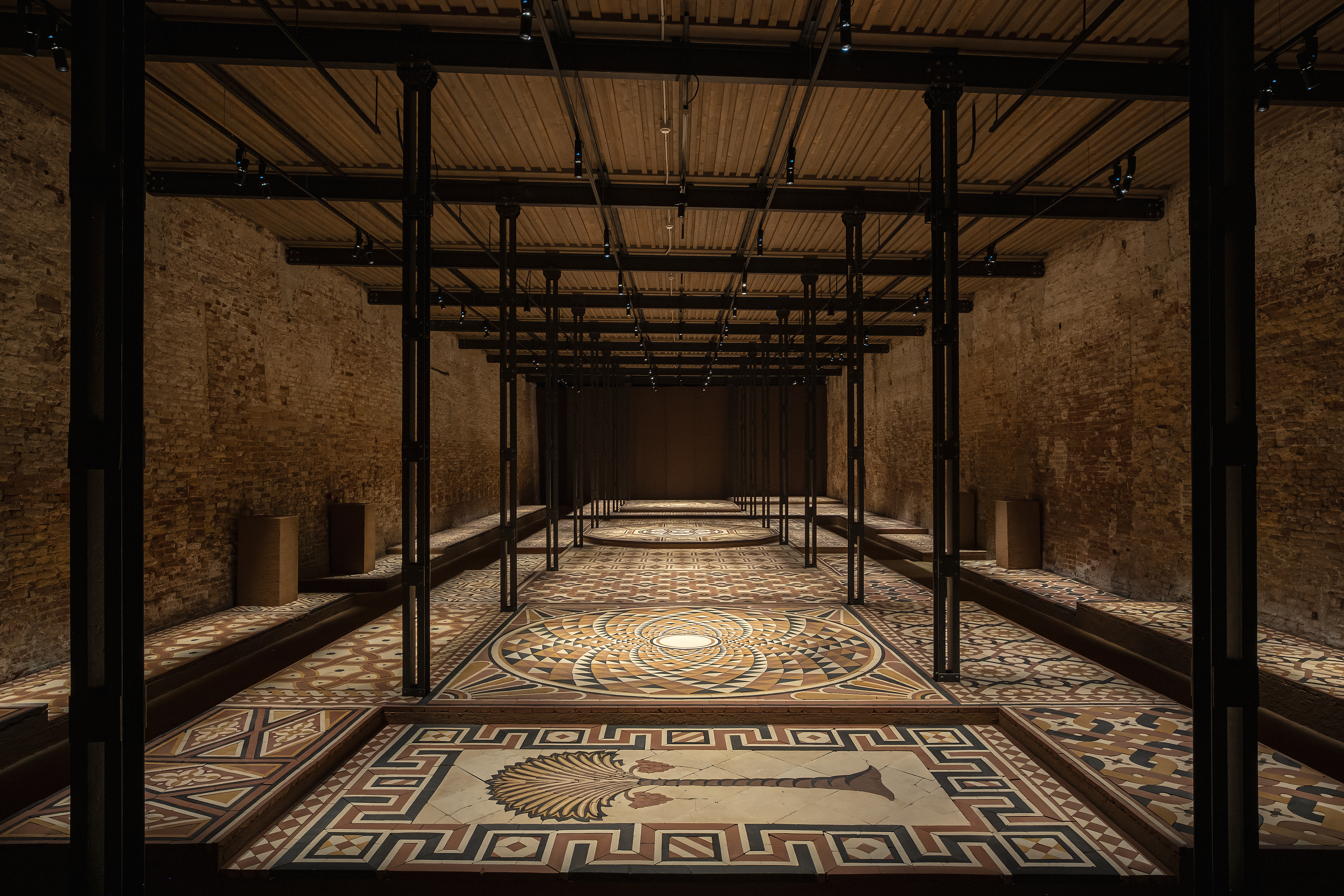
Dana Awartani, May your tears never dry, you who weep over stones. Photo courtesy of the artist and the Visual Arts Commission, Commissioner of the National Pavilion of Saudi Arabia.
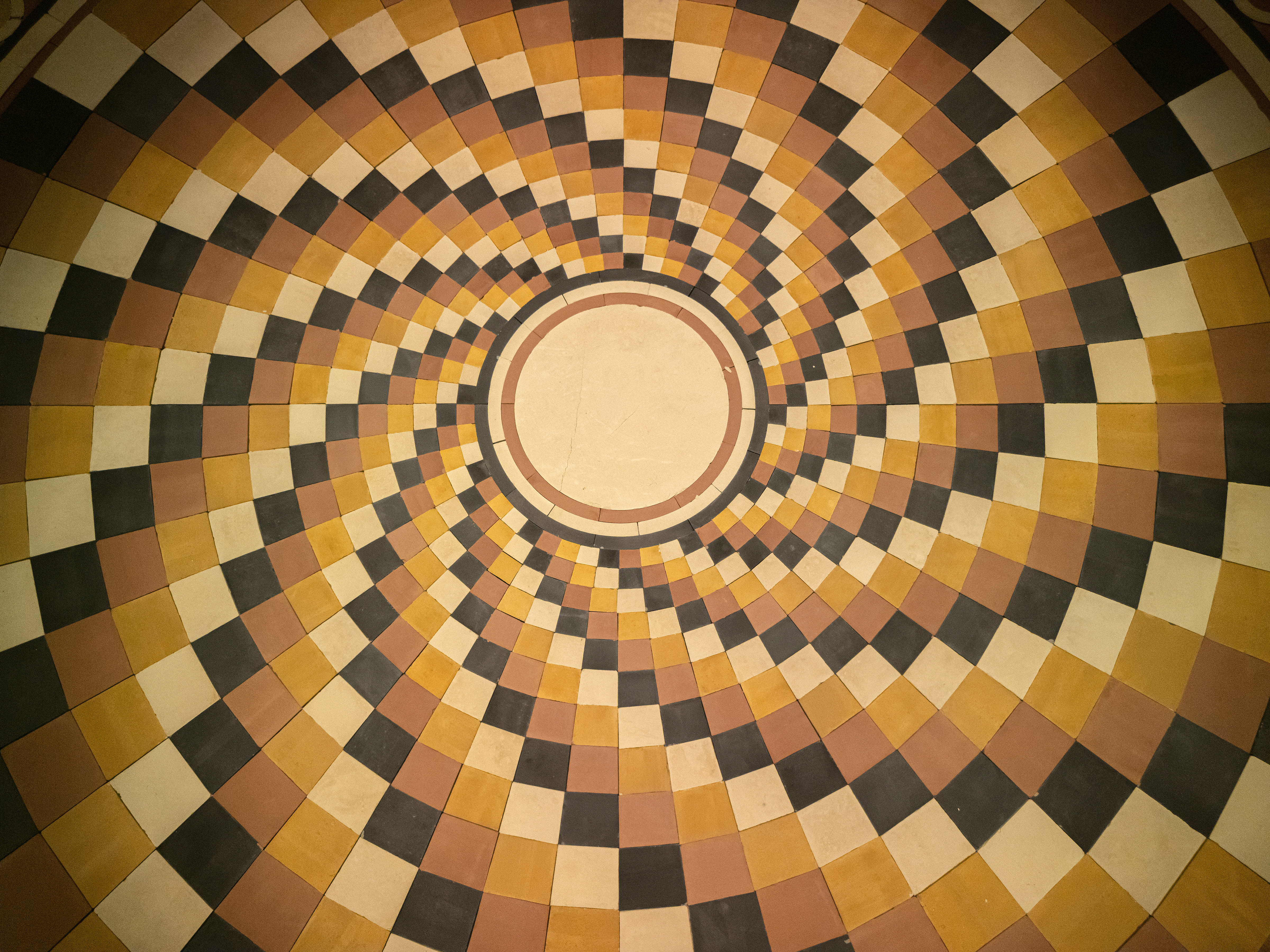
Dana Awartani, May your tears never dry, you who weep over stones. Photo courtesy of the artist and the Visual Arts Commission, Commissioner of the National Pavilion of Saudi Arabia.