Where do we come from, where are we going?
Just lie on the earth, and time flows slowly
Over the body, stretching into eternity
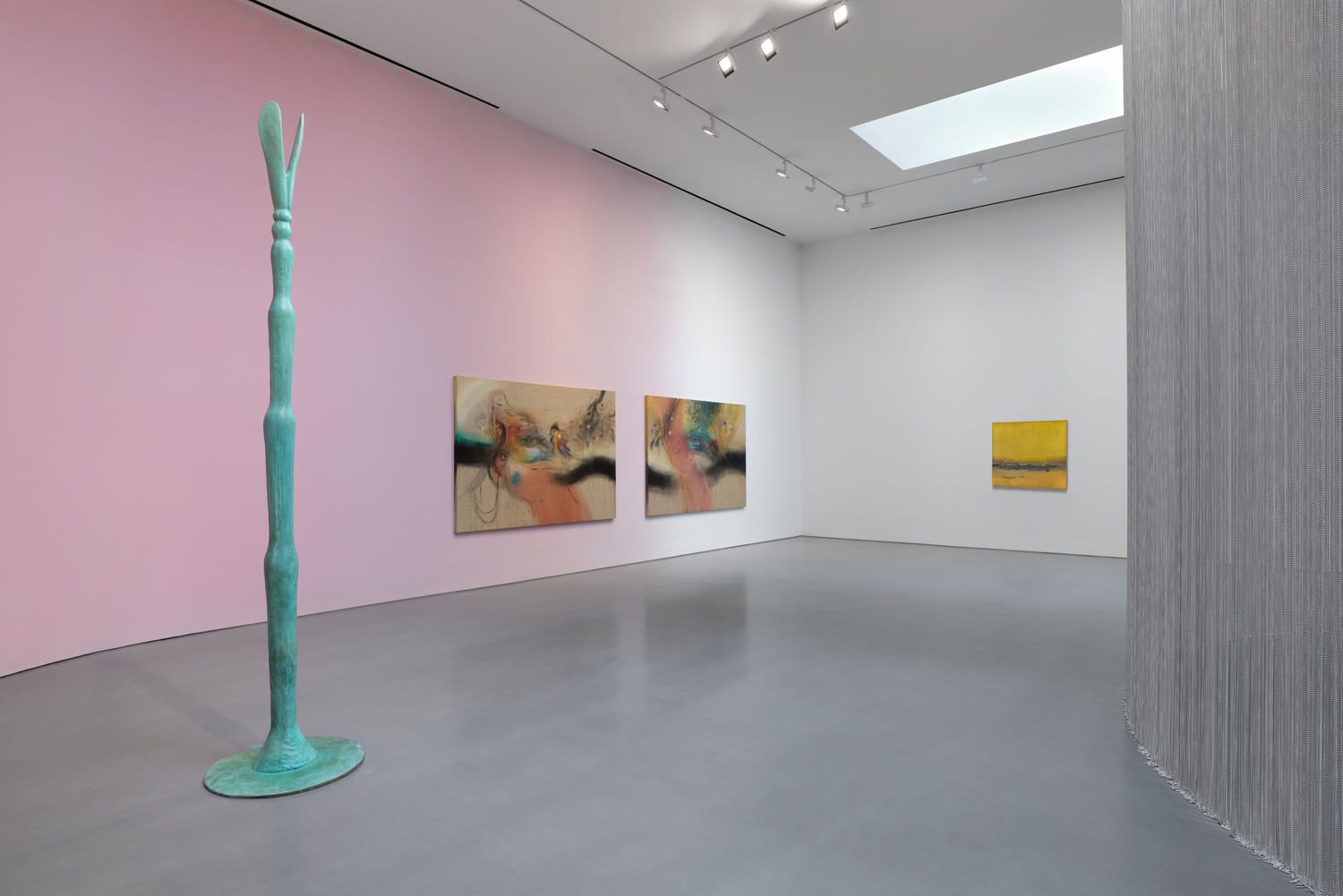
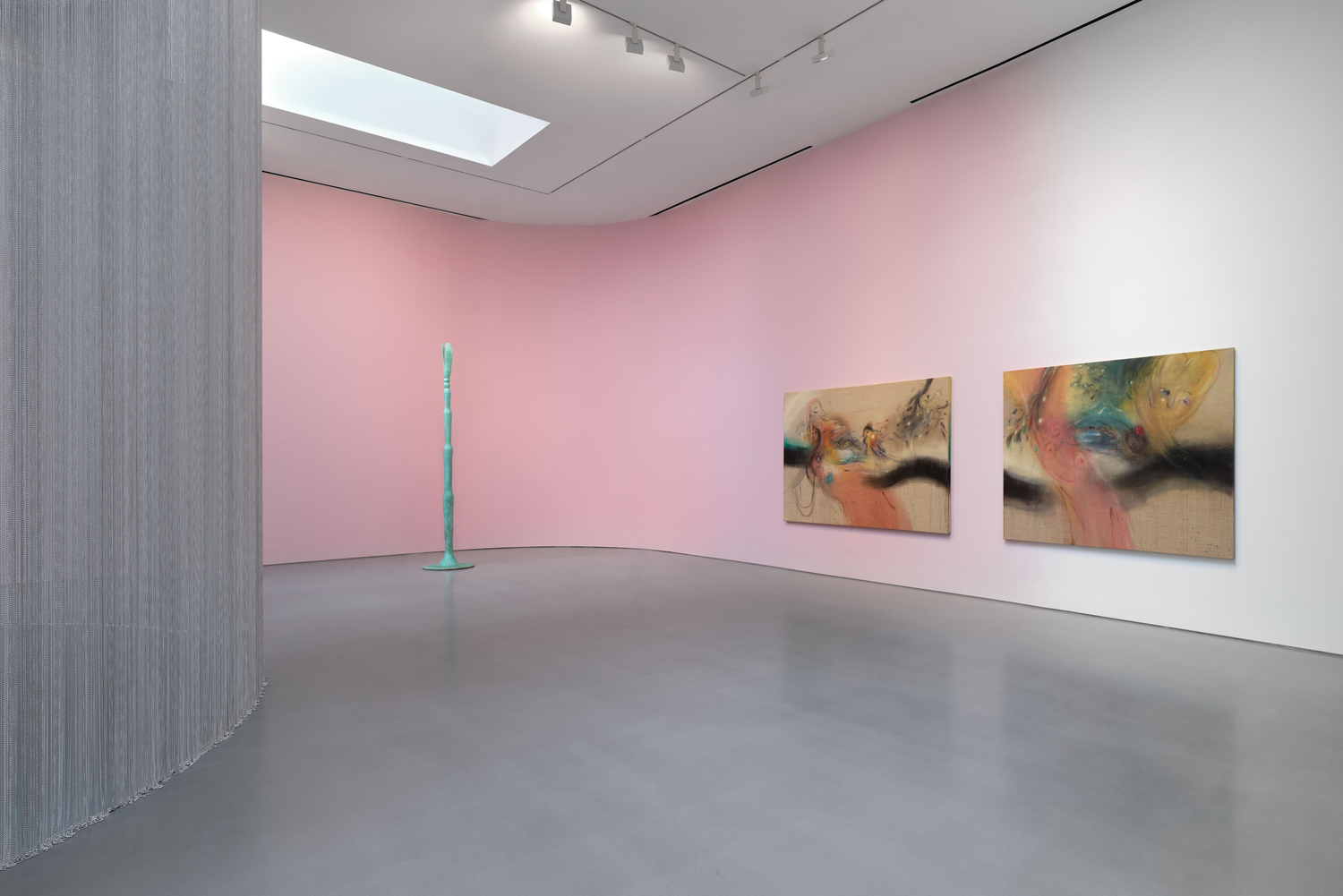
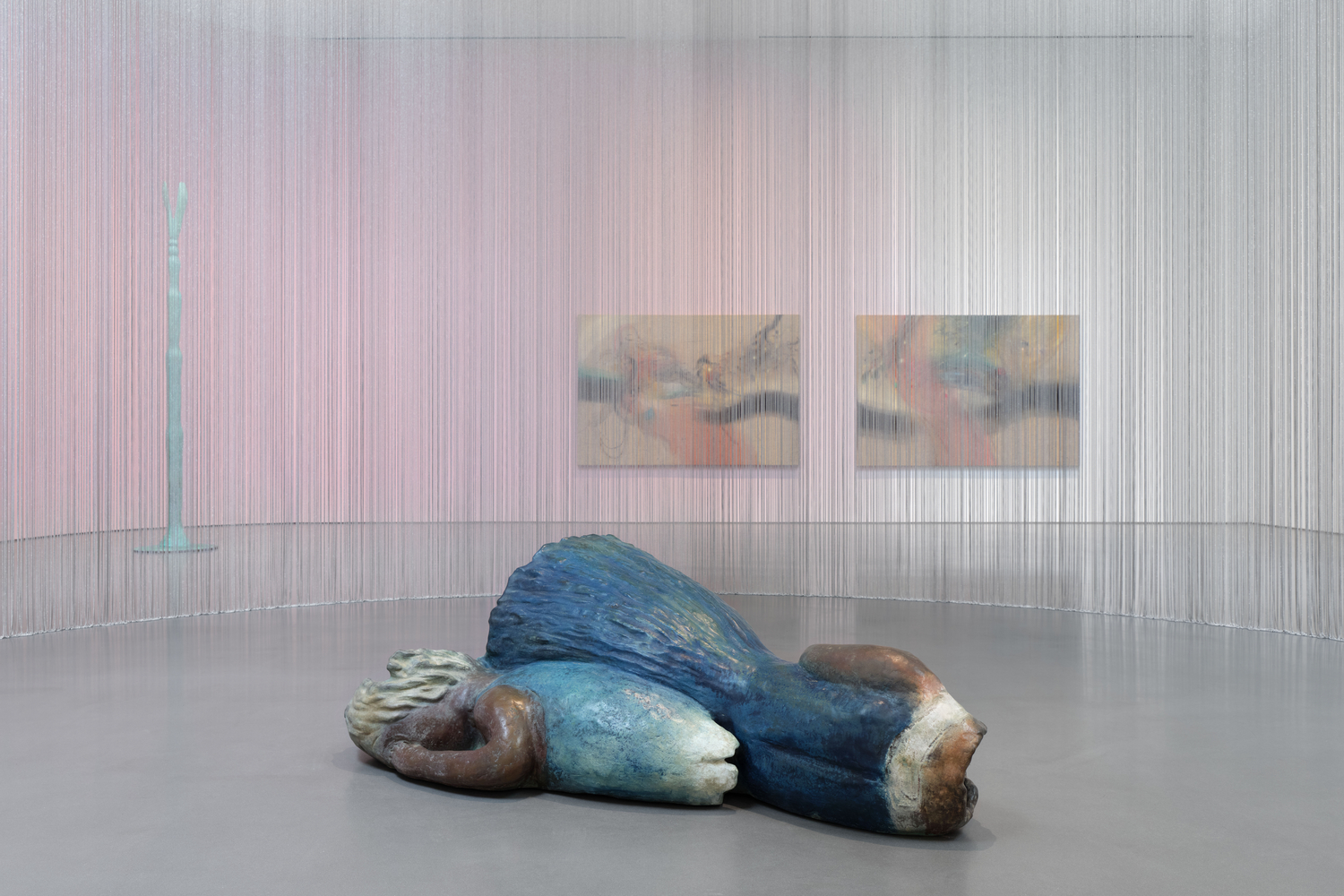
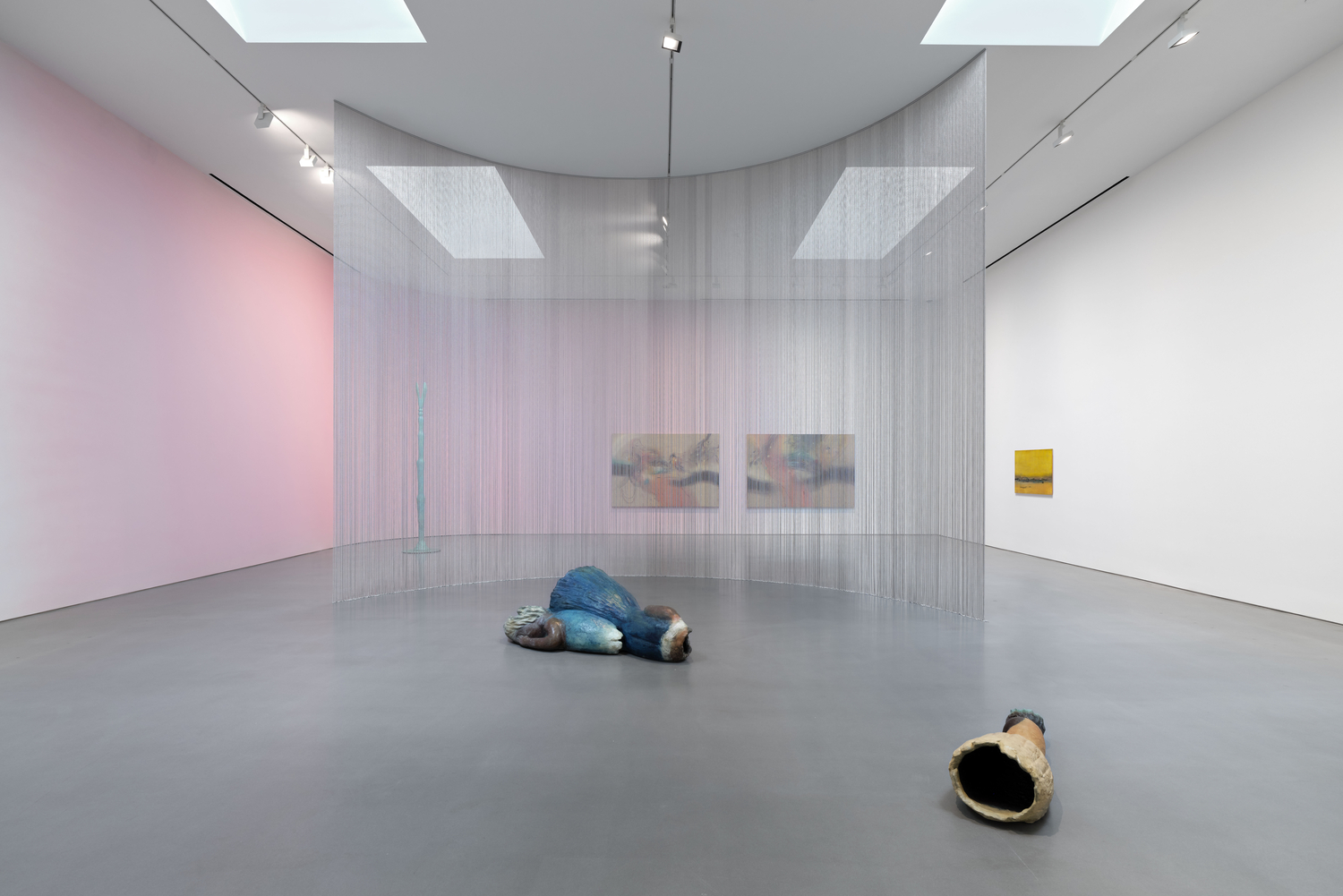
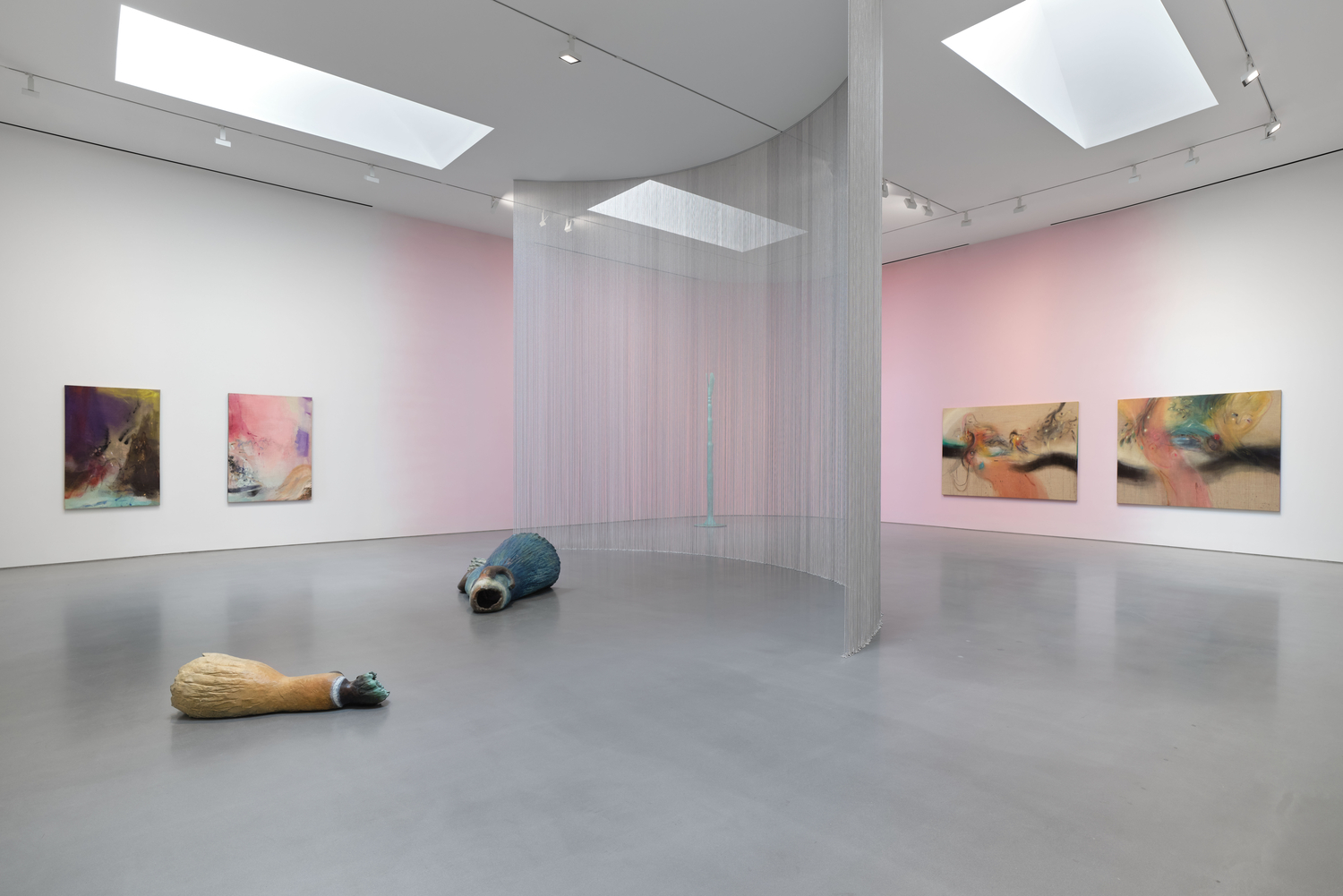
For her first exhibition in Los Angeles, Leiko Ikemura presents a range of works produced over the past decade that explore the relationship between the female body and the natural world; between the heavens and the horizon line, or as she describes it: “the place where two worlds come together”. This in-between space – straddling both light and dark, the sky and the ocean, as well as both interior and exterior worlds – is represented by a huge metallic mesh wave within the gallery, a dividing line and architectural feature designed in collaboration with her partner Philipp von Matt.
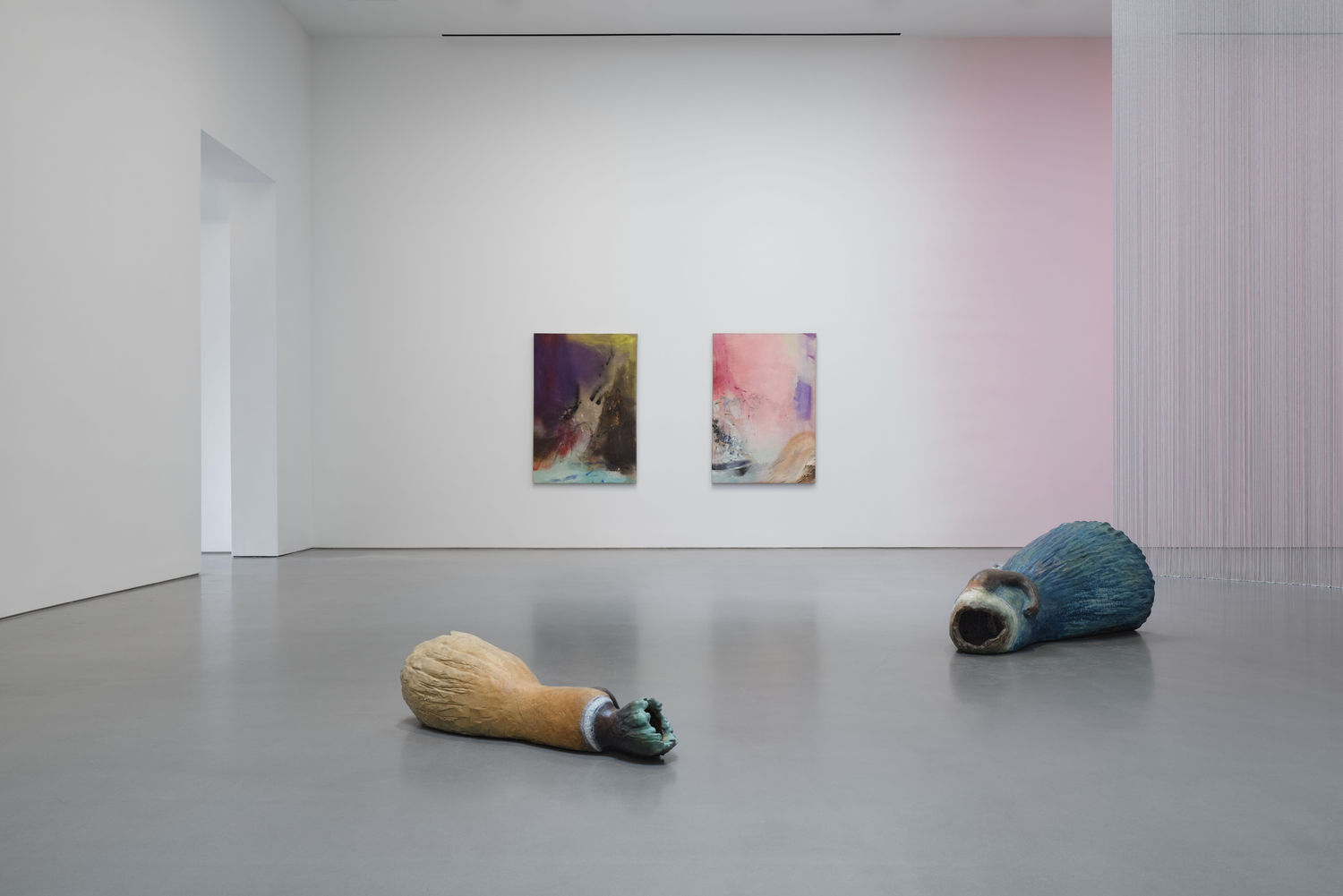
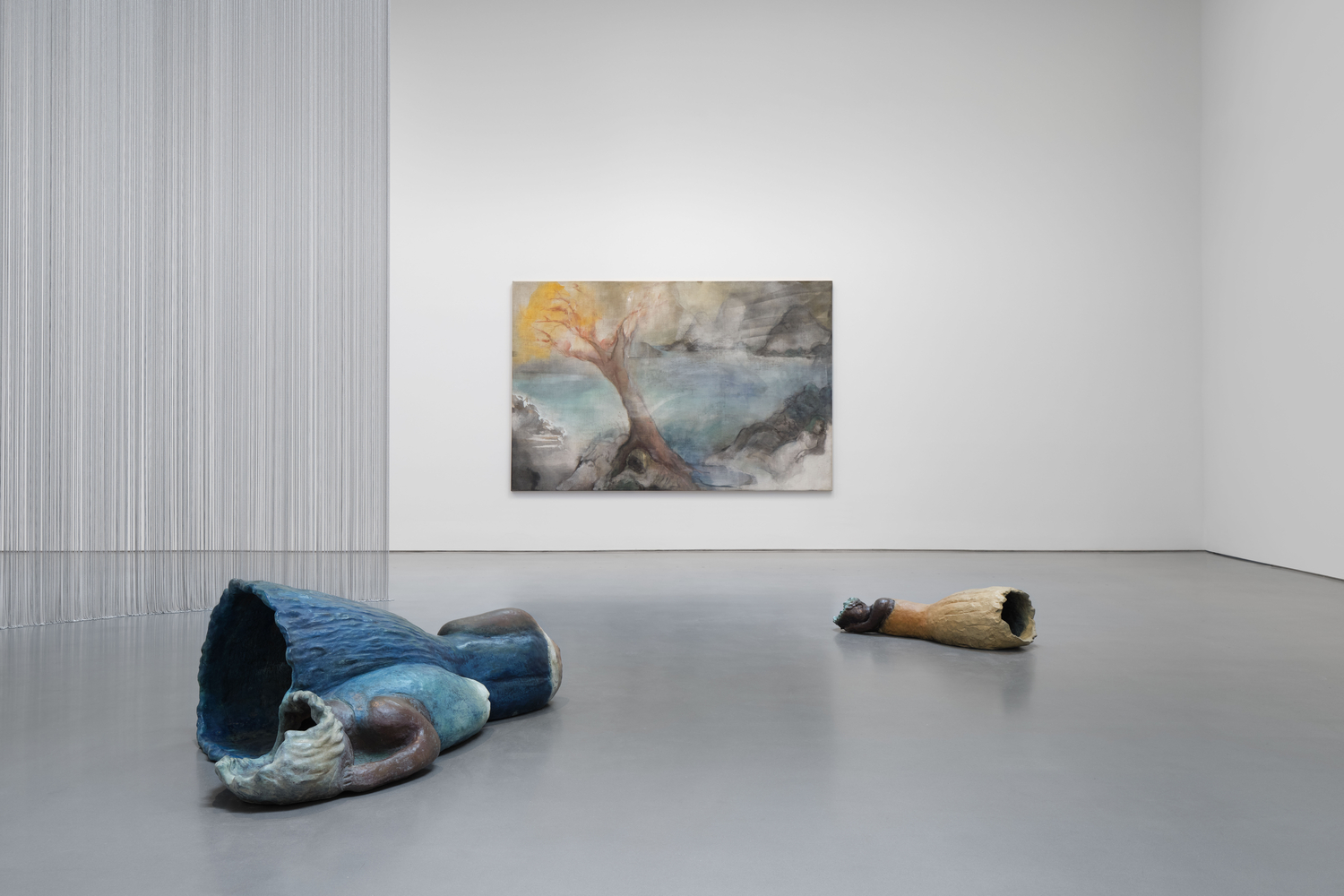
Read moreOne of Ikemura’s hybrid creations – a girl whose head has been replaced by a brace of birds – greets visitors outside the gallery. Inside the exhibition, the recurring figure of a reclining girl or woman is repeated throughout, firstly in a series of large-scale, colored bronzes, such as Lying in Yellow Dress (2021), which depicts a peacefully sleeping creature in a yellow dress. Elsewhere, Double Figure (2021) combines a pair of female forms – one crying into her hands, her legs removed at the waist and the other startlingly lacking a head – which nevertheless resembles a crashing blue wave and a fallen tree trunk. The girl's watery, mountainous or plant-like shapes undulate and merge into larger-than-life amalgams of landscape-bodies or figure-scapes.
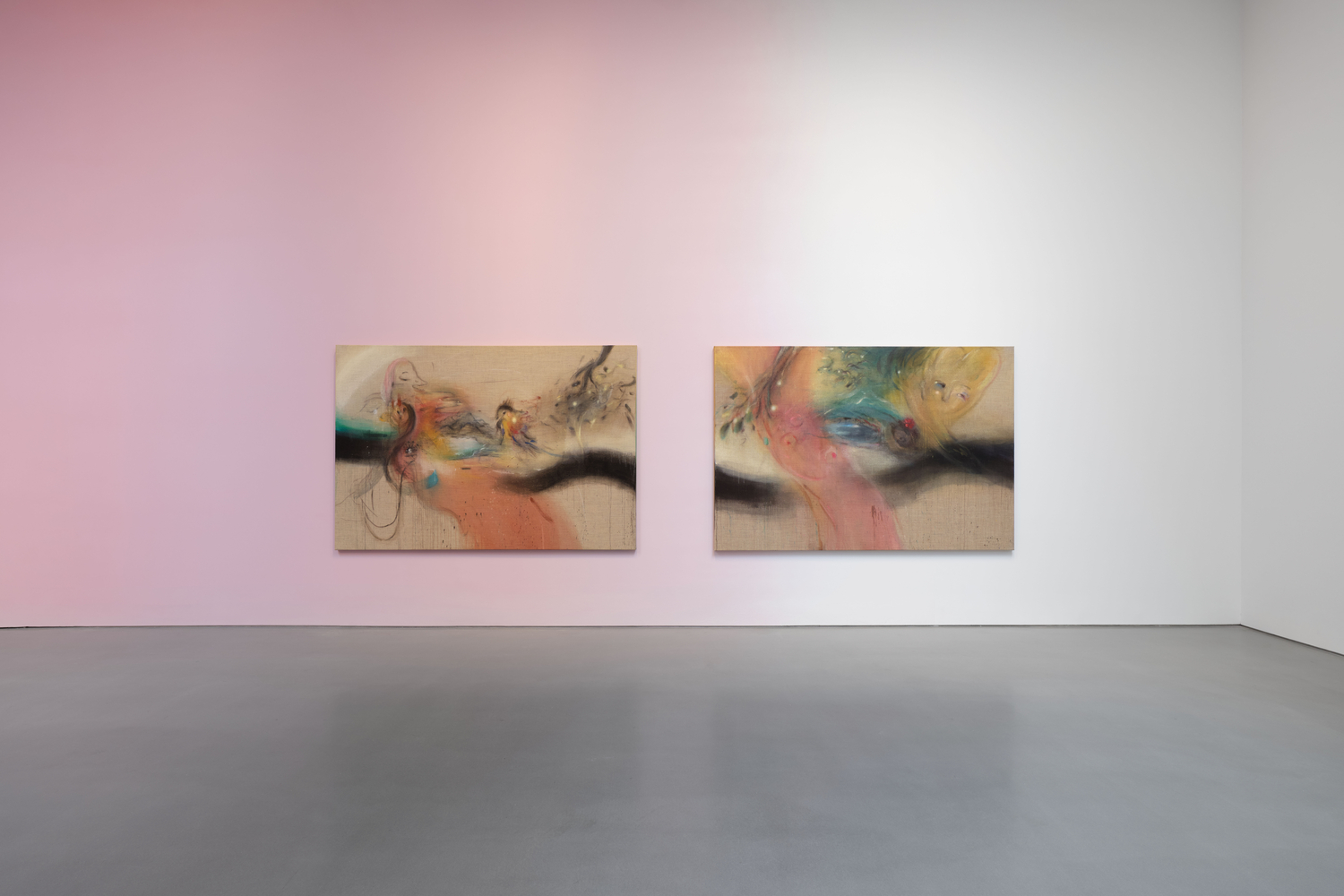
A less defined set of reclining figures feature in the large-scale tempera on jute paintings, from the loose and gestural diptych Waves (2025), with its dark connective tissue running between the two works like a river, to the tighter, earlier scene of Zarathustra I (2014). This work features a central tree seemingly growing out of a sleeping creature below, while other humanesque forms emerge from the rocky outcrops beyond the shoreline. A prominent, pyramidal stone in the top corner refers to the novel by Nietzsche, Thus Spoke Zarathustra, given that the idea for his four-volume book was said to have come to the philosopher after encountering a triangular-shaped rock, on a hill walk in Switzerland in 1881. Ikemura herself has undertaken a similarly arduous and precipitous journey and spiritual awakening: beginning with childhood in her native Japan, through to student days in Franco-era Spain, before she became a practicing artist in Switzerland and finally settled as a professor in post-Wall Germany, all while being haunted by the reality of never quite fitting in or being accepted.
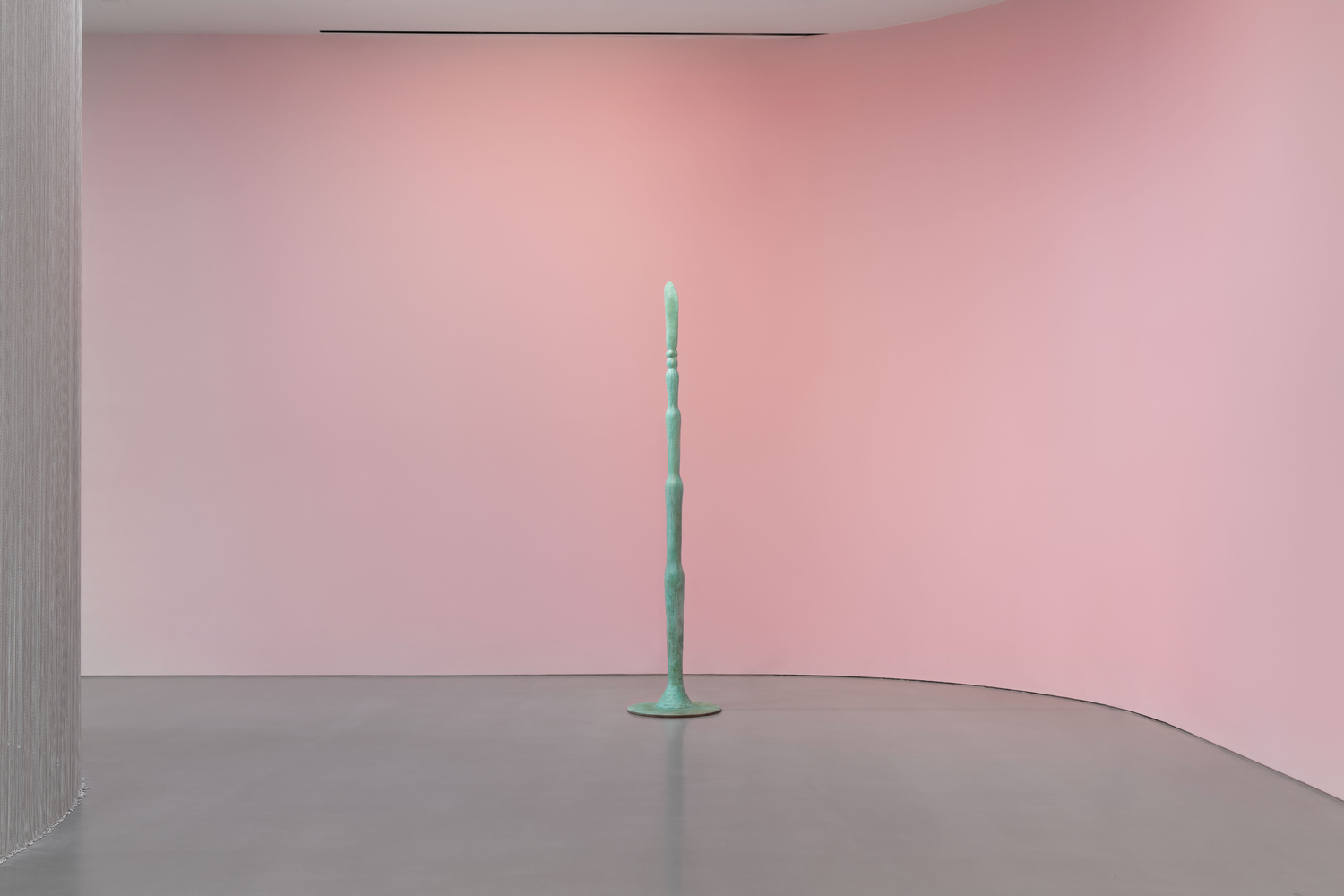
Ikemura has been painting and sculpting girls since the 1990s, often placing her adolescent characters on indeterminate backdrops, with only a horizon line as anchor. A sequence of standing portraits and patinated bronze sculptures each convey a different energy or mood, like Audry X (2025) and Figure with three Birds (2021). In addition to their overriding personalities, the figures all contain ambiguous expressions and intentions, whether an inherent sadness or a lightness of being, perhaps displaying either vulnerability or an unstoppable power, and sometimes both.
Through her fantastical treatment of the landscape painting genre, entering into the realms of reflection, dreamtime and even of conflict, the artist conjures up an otherworldly utopia in which humans and nature coexist within the melting vastness between the heavens of the cosmos and the oceanic spaces below.