In Los Angeles in the 60s a relaxed attitude towards the vernacular of the day wasn’t restricted to Pop Art, it pervaded the entire art scene. LA’s beaches, streets and freeways provided the information or setting for many of John Baldessari’s, Chris Burden’s, Bas Jan Ader’s, Allen Ruppersberg’s, and Ed Ruscha’s Conceptual and Performance pieces, while the lustrous surfaces of surfboards and custom cars were evoked by Peter Alexander, Craig Kaufman, John McCracken, Ken Price and DeWain Valentine in their hedonistic spin on Minimalism. The Southern Californians laboured away in pursuit of the perfect sheen … Whereas Pop Art represented the culture of its day, West Coast Minimalism embodied it in resins, waxes, lacquers and metallic paints. - Alex Farquharson, Brian Wilson: An Art Book
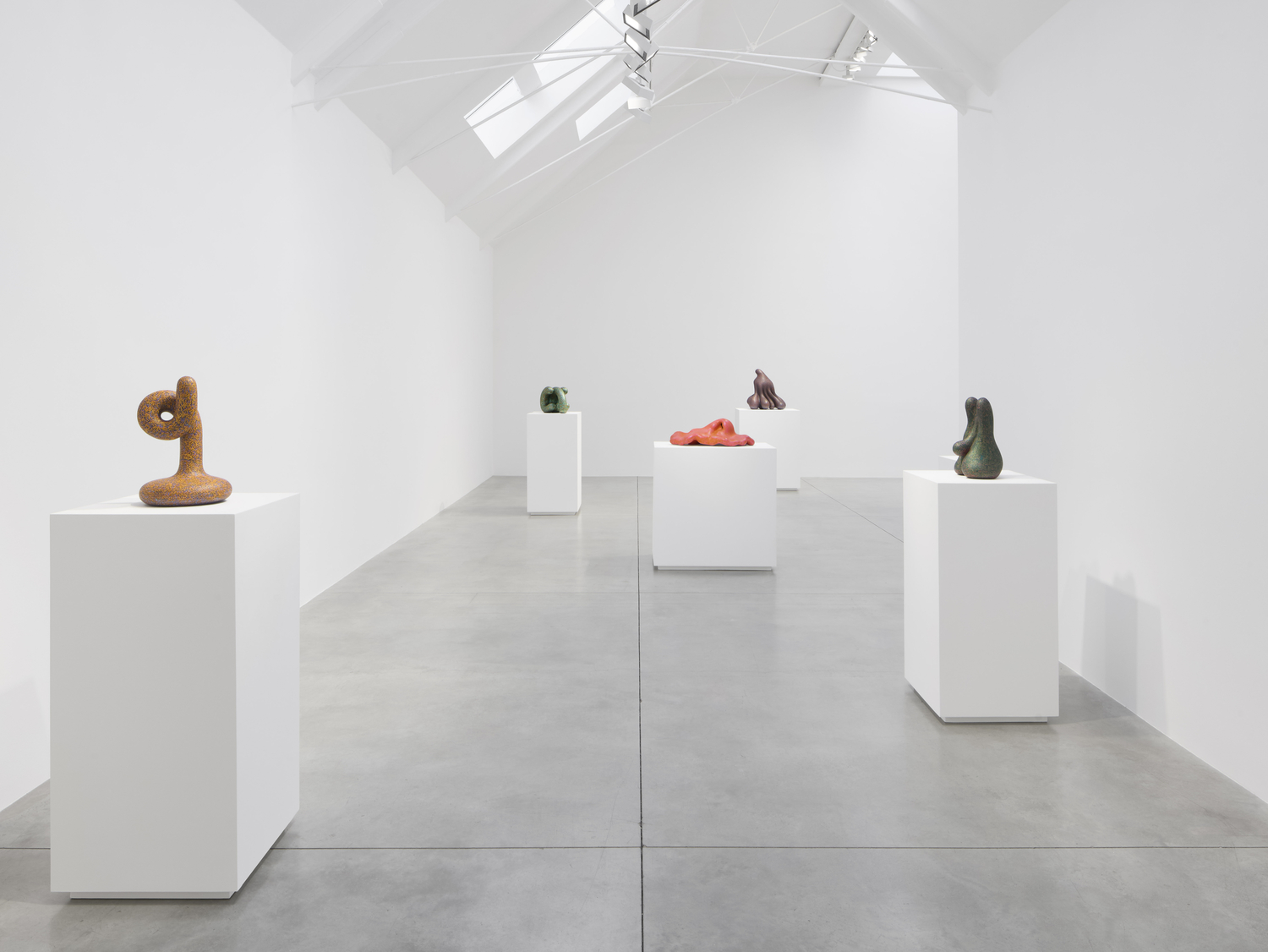
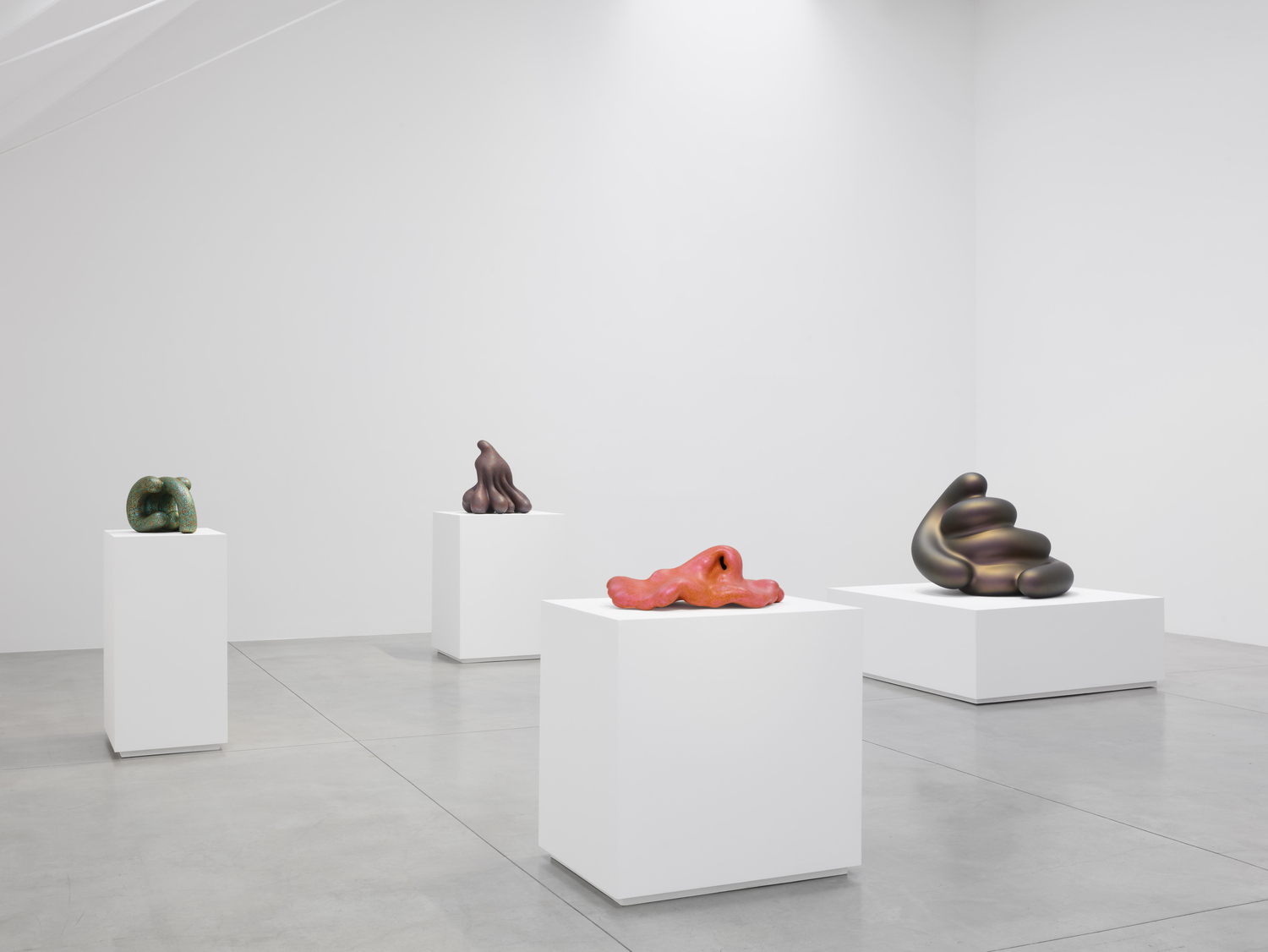
Read moreIn collaboration with Matthew Marks Gallery, Lisson is pleased to present an exhibition of work by the influential LA-based artist, Ken Price (Los Angeles, 1935-2012). Price was a relentlessly inventive artist who challenged forms through sculpture, painting and drawing throughout his five-decade career. As the first solo presentation of his work in the UK in nearly a decade, the exhibition brings together both sculpture and drawing, several of which are on view in London for the first time.
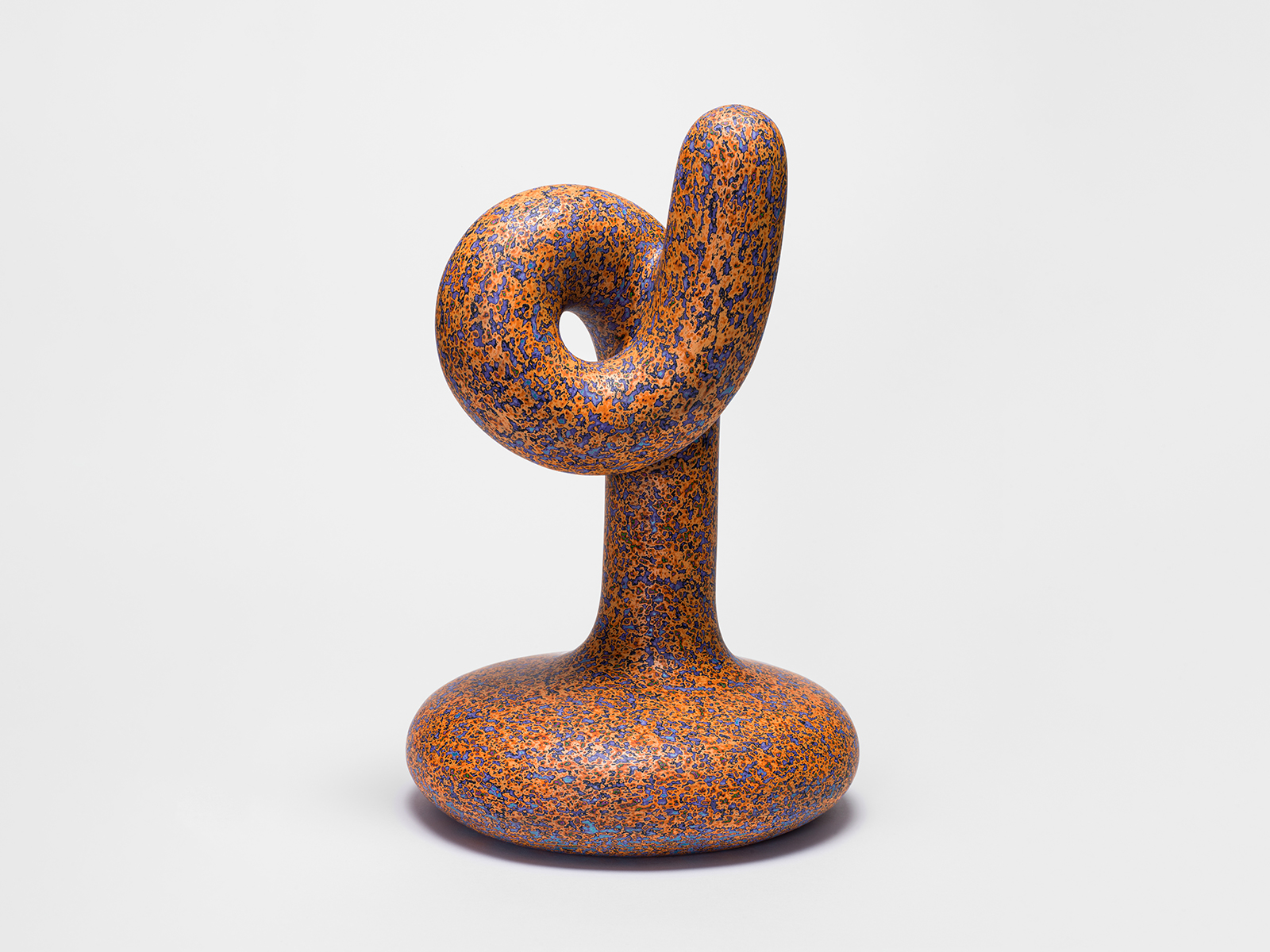
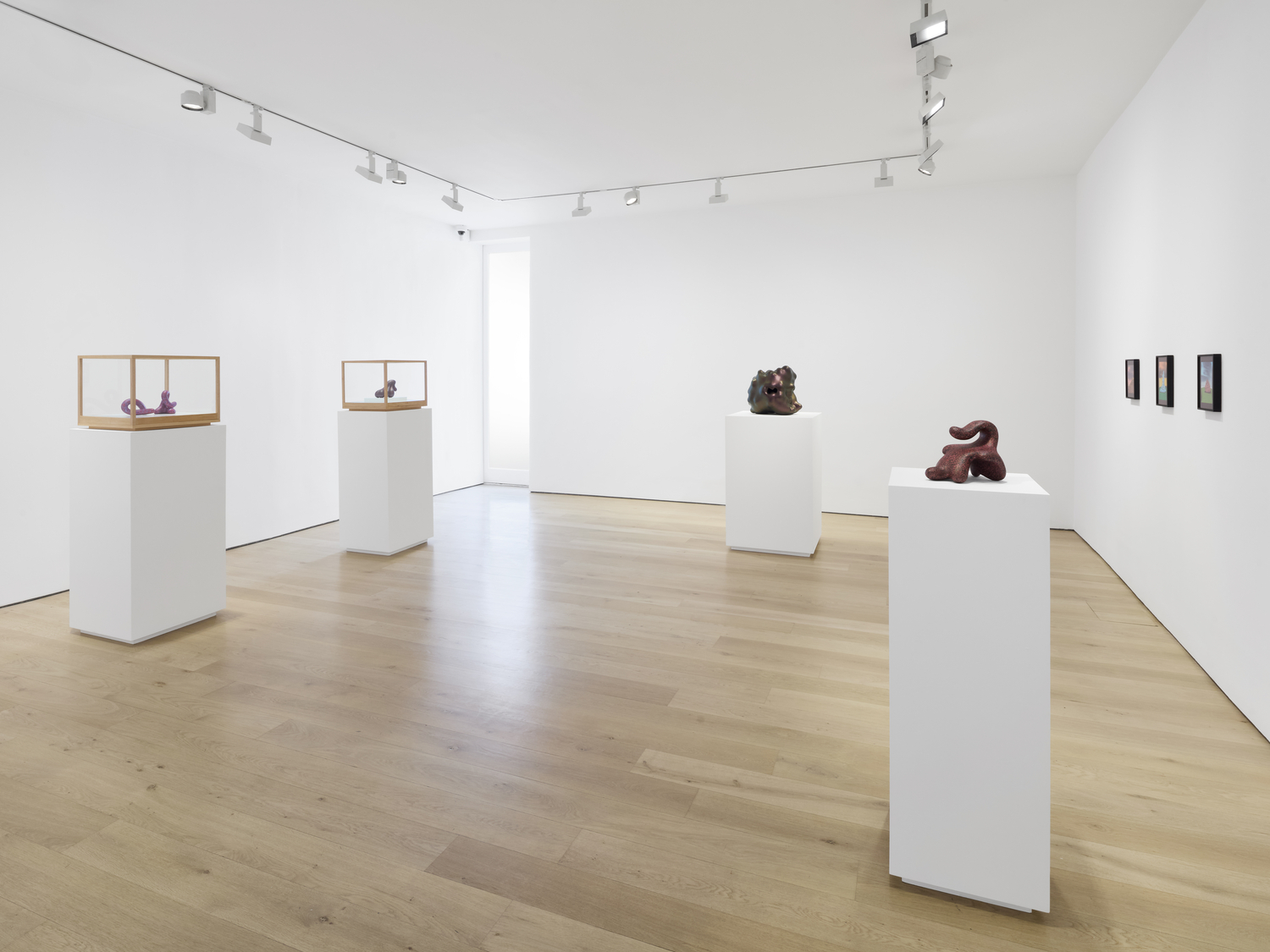
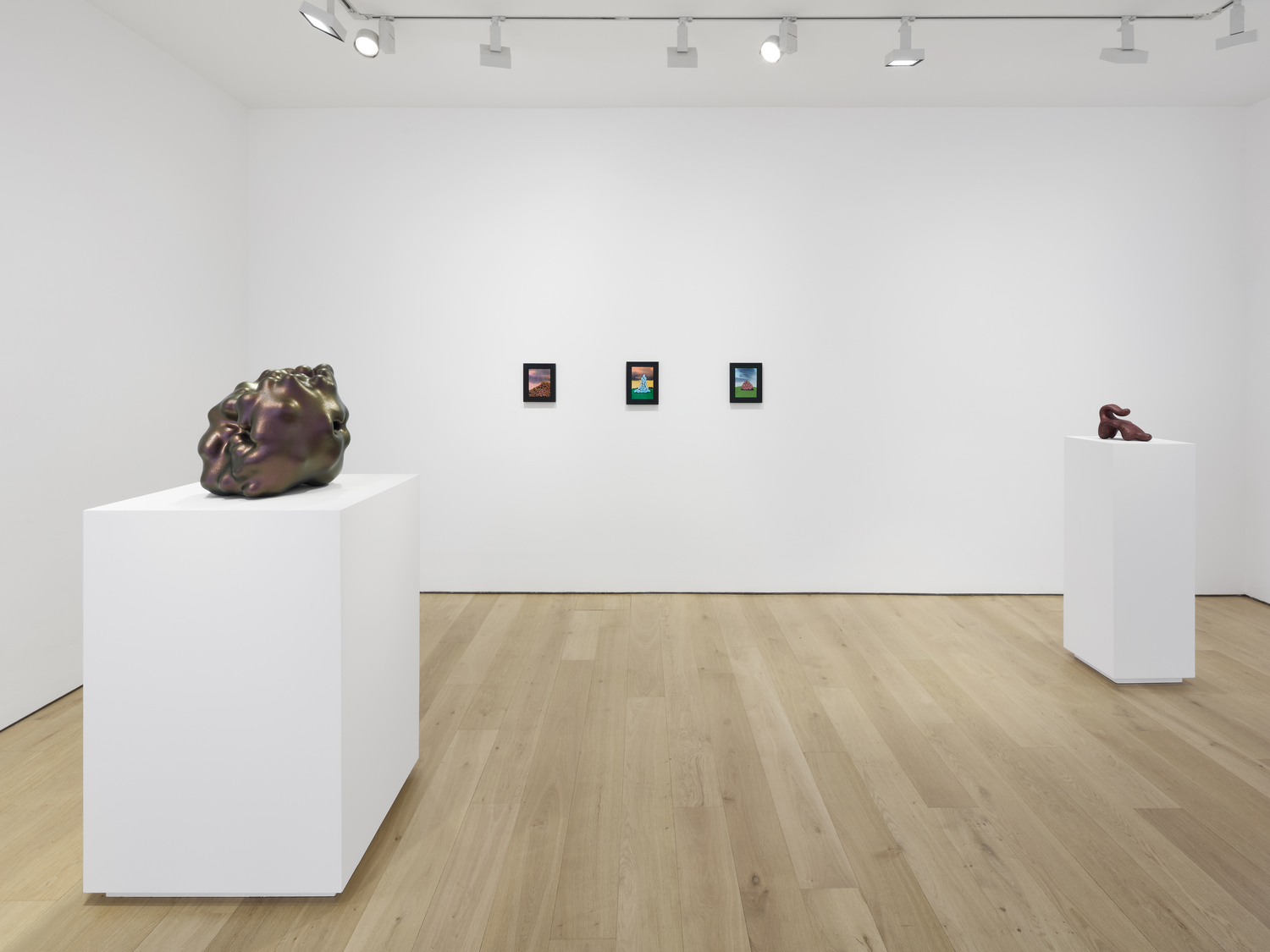
At Lisson Gallery, the exhibition showcases Price’s mastery of ceramics and expansion of the possibilities of the medium. As early as the 1960s and 70s, Price created diminutively scaled works whose innovative and outlandish shapes subverted the functionality of traditional ceramics. Works such as Prone (1997), Itself (2003), Yin (2009) and Amazon (2003) – formed from fired and painted clay – represent Price’s biomorphic, often erotic, sculptural creations. Speaking inherently to the viewer’s body, these fluid compositions play with form and balance, intimacy and seclusion. Through processes of layering and sanding pigment, Price achieves surfaces of depth and luminosity, transforming clay into objects that appear almost otherworldly.
Price was committed to utilising clay as a tool to explore his unique place and time in history. Deeply informed by the vernacular traditions of Mexican pottery and the improvisational rhythms of jazz and Pop culture, Price’s work is characterised by its vibrant palette, organic forms and tactile surfaces. His forms are also inspired by his experiences in Venice, California and New Mexico. Price witnessed the burgeoning contemporary art scene across Los Angeles, with the birth of a profusion of cultural institutions and artistic movements. He was a key figure in the LA artistic movements that originated in southern California in the 1960s, alongside other prominent artists. Following his first solo show at the Ferus Gallery in 1960, at the age of just 25, Price’s work was profiled on the cover of Artforum (1963), and his first solo presentation at the Whitney Museum of American Art in New York opened in 1969. In later years Price had significant exhibitions at the Los Angeles County Museum of Art in Los Angeles, the Menil Collection in Houston, the Walker Art Center in Minneapolis, and the Chinati Foundation in Marfa, Texas.
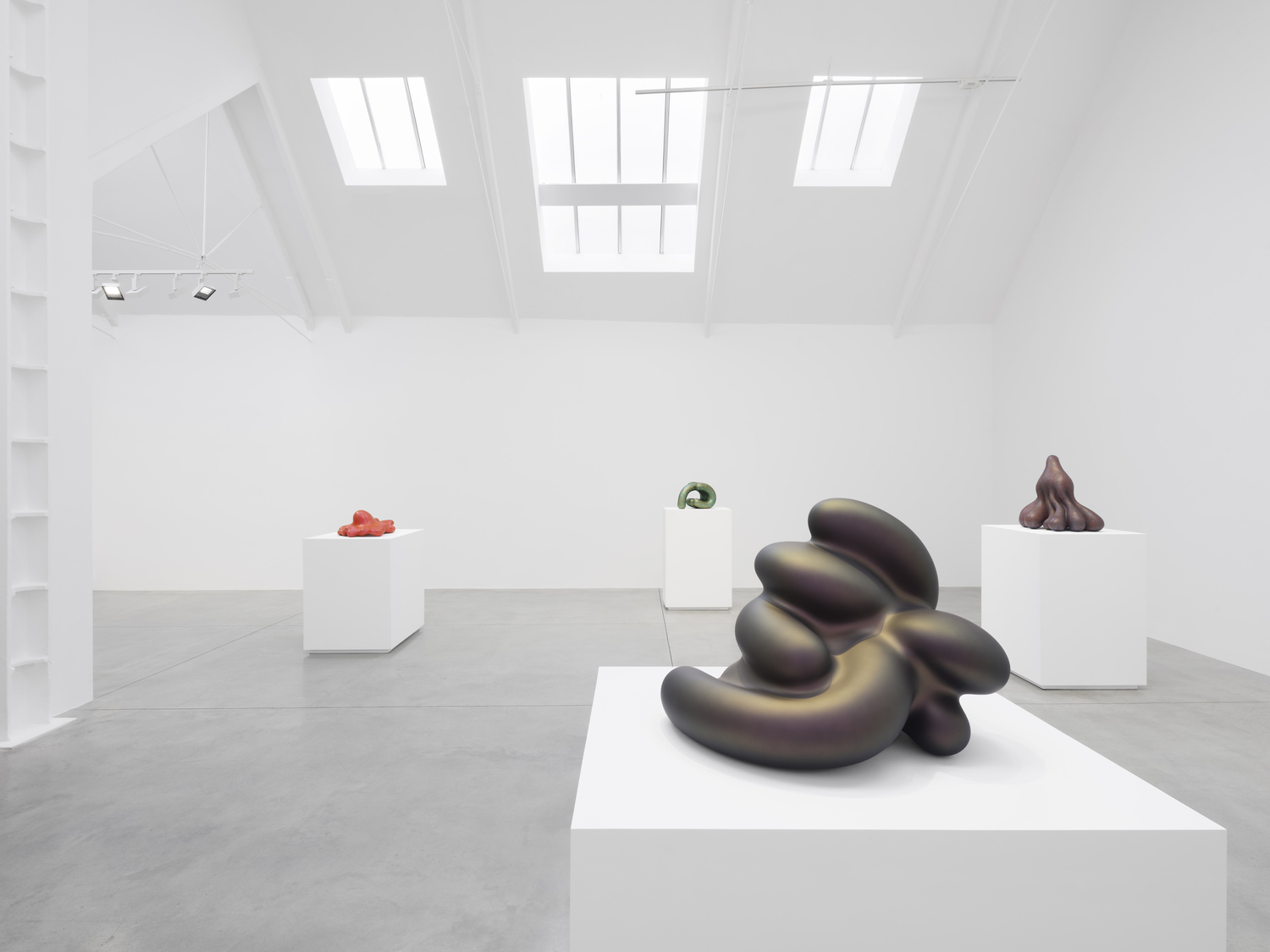
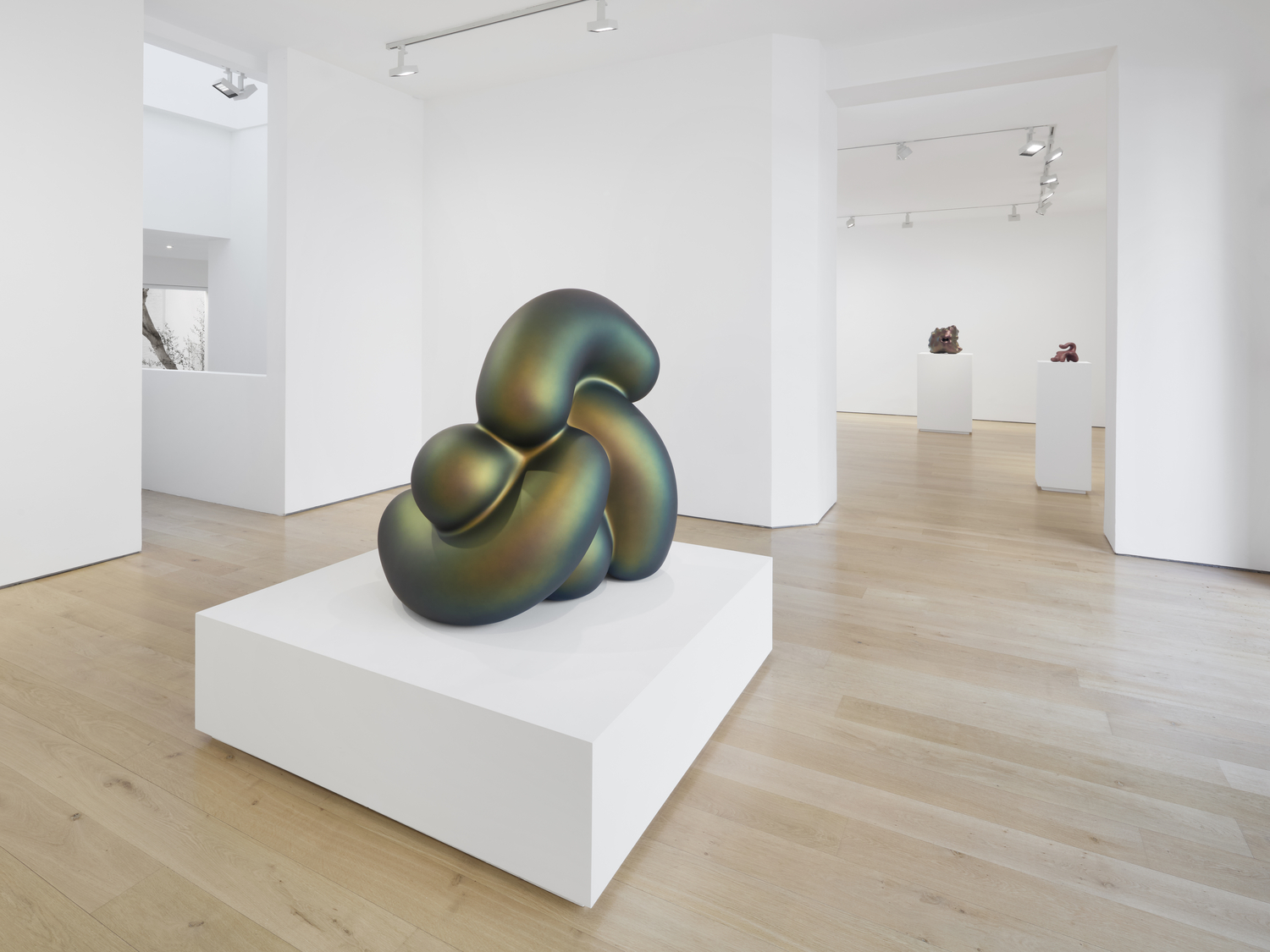
Toward the end of his life, Price initiated a dramatic shift in scale and finish, working at a notably larger scale thus amplifying the physical and perceptual impact of his forms. His late sculptures are masterful arrays of colour where the material seems to dissolve, allowing iridescence and delicacy to exist in perfect harmony. Hovering between abstraction and figuration, the work combines sensuality with humour, their smooth surfaces lacquered with lustrous colours to augment their seductive power. Percival (2009) and Ceejay (2011), for example, engage the viewer more directly – their contours and polished bronze skins informing a sense of immediacy and presence.
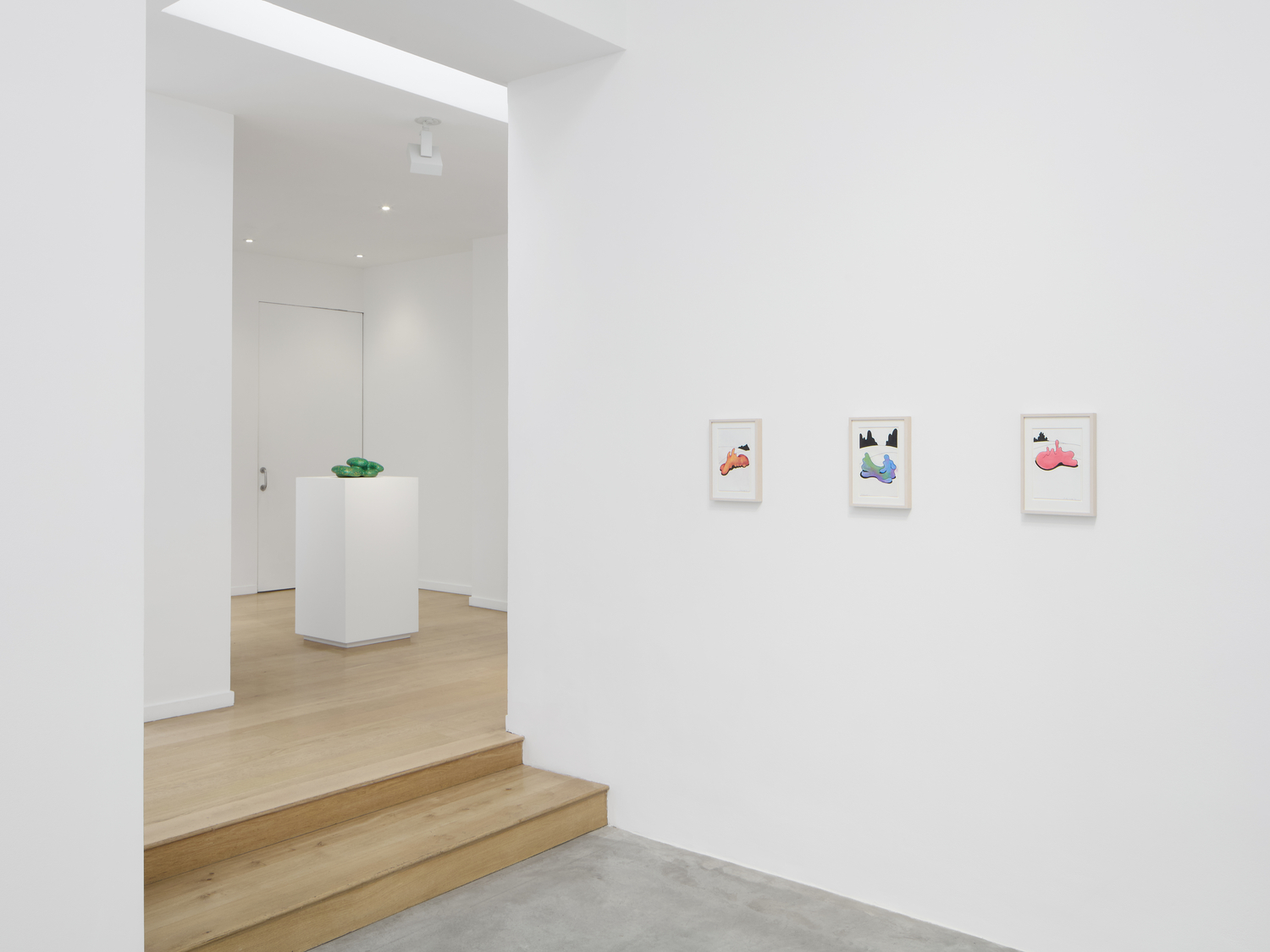
The exhibition also illustrates Price’s extraordinary draftsmanship, in works on paper such as 100 Foot Sculpture in Isolation (2007), Nature Study (2007) and Two Hermits (2006), which maintain a sculptural vocabulary across one dimension. There is a seamless gradation between Price’s sculpture and drawing: both enveloped by the world he has created, an ethereal land that is both familiar and fantasy. Drawing was always a central component of Price’s work: “For me drawing is really flexible, and I use it in different ways. It’s my way of developing ideas”. Many of his 1960s works on paper explore ideas for developing abstract sculptures, while others envision impossible objects. Following his move to New Mexico in the early 2000s, wilder landscapes began to appear in his drawings, flowing with erupting volcanoes, cyclonic skies, and turbulent seas. Unstable Ground (2006) presents an atmosphere of heightened drama reflecting both the influence of the landscape and a deepening engagement with narrative.